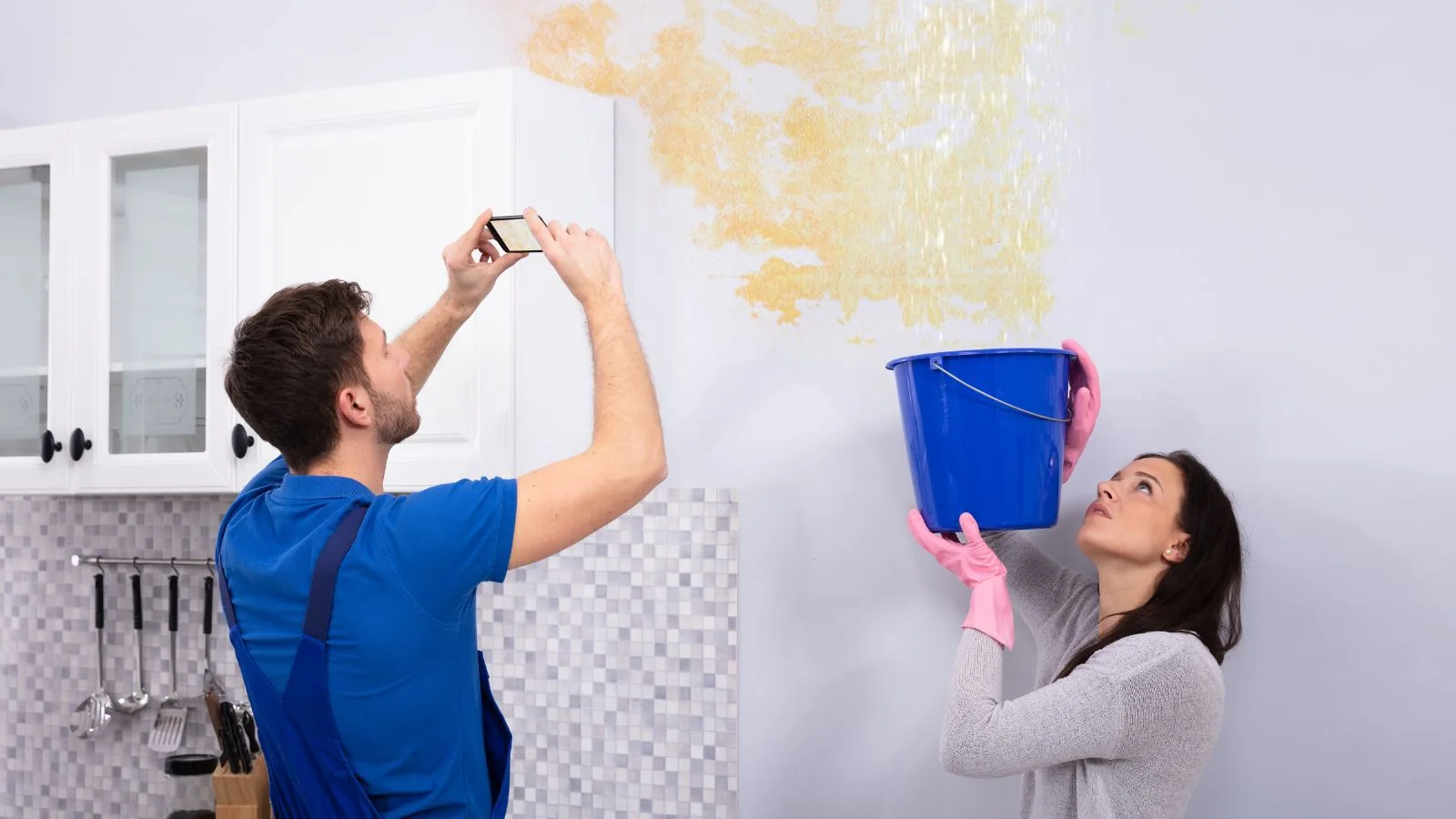
Wall and drywall water damage repair is the drying, cutting out and replacement of gypsum board, insulation and framing that water has soaked. In Morganville homes, walls take water from pipes inside them, from floors above and from floods that wick up from the base. Drywall is paper-faced gypsum, so it absorbs water quickly and can lose strength.
What you see on the surface is rarely the whole story. A brown stain can sit over a wet cavity, and a dry-looking wall can have wet insulation behind it. We use a moisture meter and a thermal camera to read the whole wall, not only the stain.
Signs a wall is holding water
- Bubbling, peeling or discolored paint.
- A soft, crumbly or sagging area when pressed.
- Stains that grow, with brown or yellow edges.
- A musty smell near the wall base.
- Baseboards that swell or separate.
A stain that returns after repainting means the source is still active or the cavity is still wet. Do not seal in moisture before it has dried.
What to do first
Find and stop the source
Close the main or fixture valve. A pipe in the wall, a leak above or a roof source all need to be identified.
Protect the floor
Place towels and plastic at the wall base.
Do not paint
Painting over a wet wall traps moisture.
Call for readings
A professional moisture check shows how far the water went.
When drywall can be dried and when it is cut out
Under the ANSI/IICRC S500 standard, drywall that was wet briefly with clean water can sometimes be dried in place with air movers and by drilling small holes at the base for airflow. Drywall that sagged, crumbled, was wet for days or touched contaminated water is cut out. Insulation that got wet is usually removed because it stays damp and heavy.
Cuts are made above the wet line, often a flood cut 12 to 24 inches above the floor, or higher if wicking went farther. The cavity is then dried and checked before new drywall goes in. EPA guidance says moisture control is the key to mold control, and that wet materials should be dried within 24 to 48 hours.
| Wall condition | Usual approach | Reason |
|---|---|---|
| Damp briefly, firm and intact | Dry in place | Gypsum has not lost strength. |
| Sagging, soft or crumbling | Cut out and replace | Water weakened the board. |
| Wet insulation behind | Remove insulation, dry cavity | Insulation holds water. |
| Contaminated water contact | Cut out | Porous materials cannot be cleaned reliably. |
Repair after drying
New drywall is hung, taped, mudded and sanded, then primed and painted. Texture is matched where the wall was textured. A stain-blocking primer is used over old stained areas. These steps are a rebuild and are scoped and priced separately from drying.
Old stains, new stains and what they tell you
A dry stain with a sharp brown edge usually marks an old event that has stopped. A damp stain with a soft edge usually marks water that is still arriving or has not yet dried. Rings inside a stain often mean repeated wetting, which suggests a slow leak that comes and goes with rain or with use of a fixture.
Knowing which one you have saves money, because repainting a dry stain is simple while repainting a wet one repeats the problem. A moisture reading takes minutes, and it turns a guess into a decision about whether to dry, cut or simply refinish the wall.
Wall stained or bubbling? Call and we assess what is behind it.
Call (732) 352-9660What changes the cost of wall and drywall water damage repair
Wall area affected
The height and length of the wet section set the scope.
Insulation and framing
Wet insulation is replaced, wet framing is dried.
Water category
Contaminated water means removal.
Texture and finish
Matching texture and paint adds labor.
Source repair
Fixing the pipe or roof is separate.
Insurance usually responds to sudden loss. Check your policy and ask your insurer. Want your real number? Call (732) 352-9660.
Related work and nearby towns
Ceiling sections are described under ceiling water damage repair, and persistent odors under mold remediation. We also repair walls in Matawan and Spotswood.
Frequently asked questions
Not until the wall is confirmed dry and the source is fixed. Use a stain-blocking primer over old stains.
A moisture meter or a thermal camera shows it. Wet insulation looks flat or clumped when opened.
Above the wet line, which is found by readings. It can be 12 to 24 inches or more.
A drywall contractor or painter. We provide a written scope and can coordinate.
Sudden water damage is often covered. Check your policy and ask your insurer.