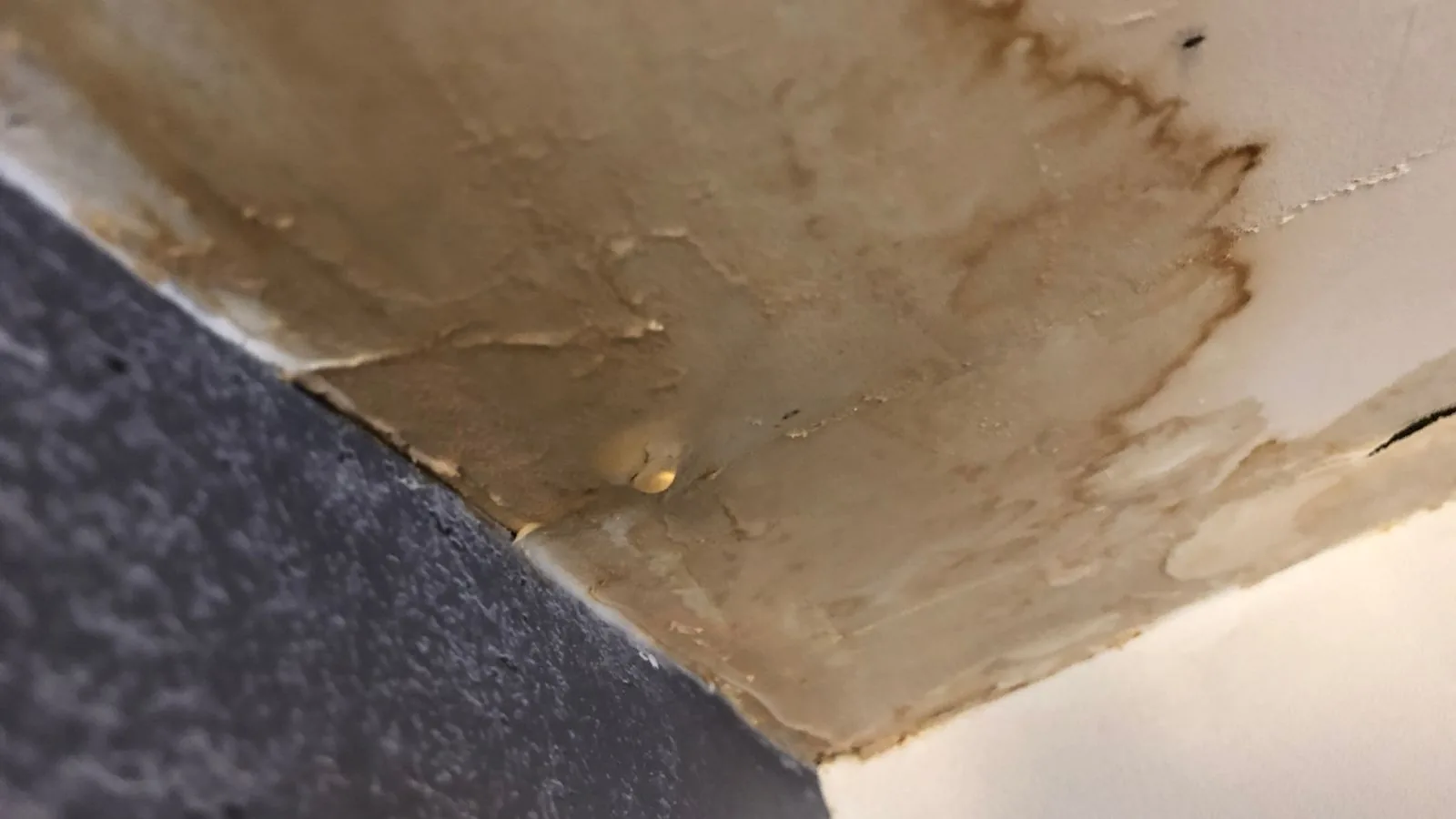
AC leak water damage is the damage from condensation that escapes an air conditioner or air handler, usually through a clogged condensate line, a rusted drain pan or a frozen coil that thaws. A Morganville home runs AC through humid summers, so the system produces gallons of water a day that must drain safely. When it does not, the water runs into ceilings, closets and floors.
An AC leak is usually a slow problem, not a sudden flood, but it can still be serious when it runs for days unseen. The system itself is an HVAC technician's repair, and we dry and repair what the water reached. If the stain is on a ceiling, ceiling water damage repair covers the same repair in more detail.
What to do when an AC is leaking
Turn the system off
Switch the thermostat to off so the unit stops producing condensate.
Check the drain pan
If you can see a pan with standing water, empty it with a wet vacuum.
Protect the area
Place towels and a bucket. Move belongings off the floor under the unit.
Call an HVAC technician
They clear the line and check for a frozen coil or a rusted pan.
Why air conditioners leak
- A clogged condensate line backs water up into the pan.
- A rusted or cracked drain pan that no longer holds water.
- A dirty air filter that causes the coil to freeze, then thaw and overflow.
- Low refrigerant that also causes freezing.
- A poorly sloped drain line.
Many air handlers sit in an attic, a closet or a utility space. A leak there reaches the ceiling below or the wall base next to it. In an attic, wet insulation holds water and spreads it.
How AC leak damage is handled
We find the wet area with a moisture meter and a thermal camera, then dry the cavity with air movers and a dehumidifier. Wet insulation is removed and ceiling drywall is cut out if it has sagged. Because AC condensate is typically clean water, the work focuses on drying and on preventing mold, which needs moisture to grow. Drying goals follow the ANSI/IICRC S500 standard.
If a stain or musty smell has been present for weeks, the damage may be older. Ask us to check wall bases and the surrounding materials for moisture before repainting.
| Where the unit is | Where water goes | What to expect |
|---|---|---|
| Attic | Insulation, then ceiling below | Insulation removal, ceiling repair. |
| Closet or utility room | Floor and adjacent wall base | Drying floor and wall bases. |
| Basement | Floor and stored items | Drying and sorting contents. |
Preventing the next AC leak
Most condensate leaks are maintenance problems. Replace the filter on schedule, keep the outdoor and indoor coils clean and have the drain line flushed each spring. Many technicians also fit a float switch in the drain pan that shuts the system off before the pan overflows, which is a low-cost safeguard for any air handler above a finished ceiling.
If your system sits in an attic, look at the pan and the ceiling below it at the start of each cooling season. A small stain caught early is a drying job, not a rebuild.
AC leak left a stain? Call and we assess what the water reached.
Call (732) 352-9660What changes the cost of AC leak water damage repair
How long it leaked
A leak found in days is small, while one that ran all season can be larger.
Location of the unit
Attic leaks wet insulation and ceilings, floor leaks wet flooring.
Materials affected
Insulation and drywall are replaced more often than dried.
Drying
Equipment follows moisture readings.
HVAC repair
Clearing the line and replacing the pan are separate.
Insurance treatment varies, since gradual leaks are often treated differently from sudden ones. Check your policy and ask your insurer. Want your real number? Call (732) 352-9660.
Related work and nearby towns
If the AC is in a crawl space or low area, crawl space water damage covers that environment. Drying follows structural drying. Homes in Cliffwood and nearby towns call us for AC leak damage.
Frequently asked questions
Mold needs moisture, so a long-running AC leak can create conditions for it. Dry the area quickly and fix the cause. Health questions belong with a physician.
An HVAC technician. We handle the water damage.
Stains that appear in summer, near the air handler or ductwork, and that grow while the system runs, point to AC condensate.
Condensate is usually clean, though it can pick up dust or debris in a pan or in insulation.
It depends on whether the damage was sudden and what the policy says. Check your policy and ask your insurer.