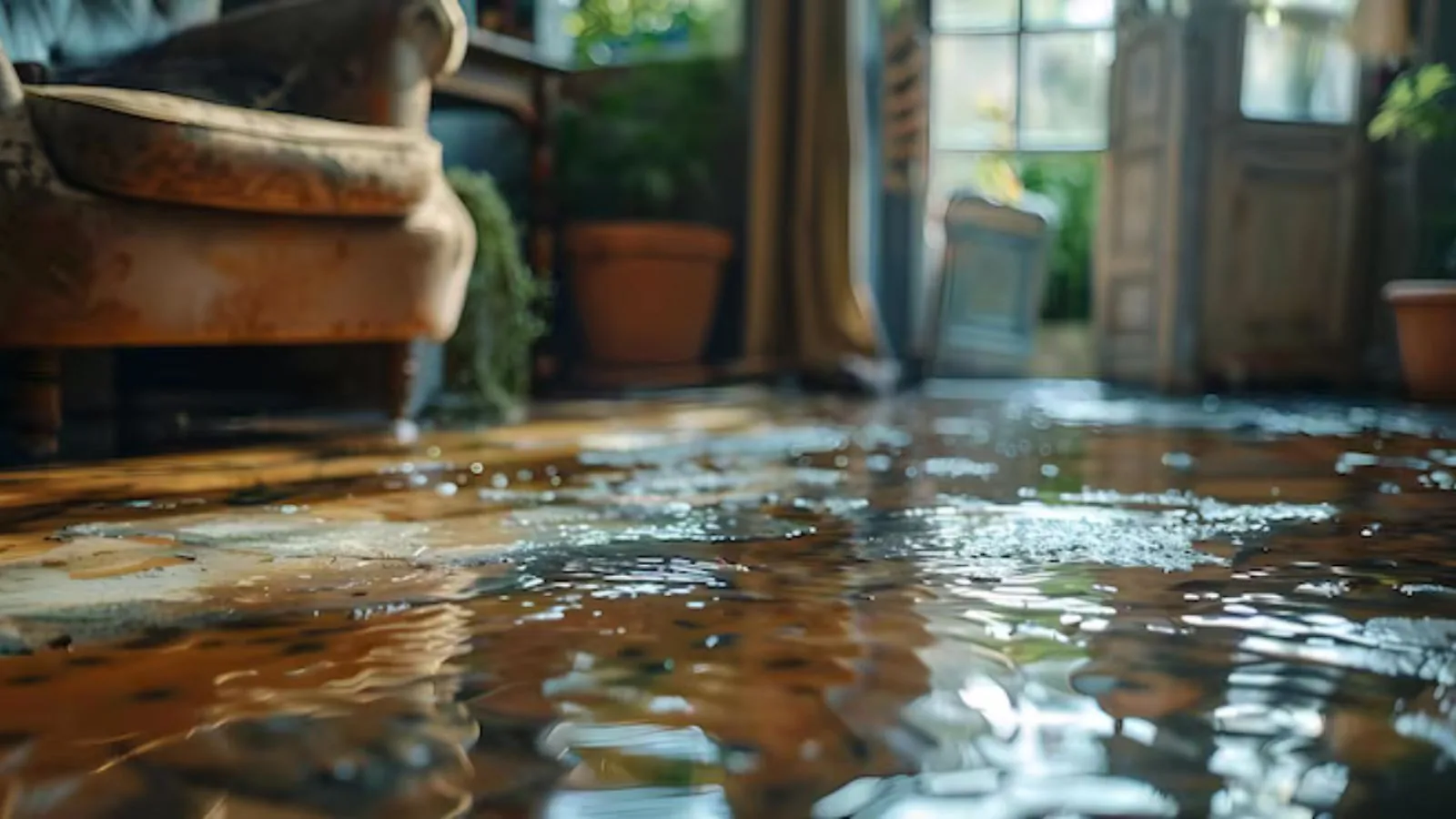
Flood damage restoration is the removal, cleaning and drying of a building after surface water, groundwater or storm runoff has entered it. This is an emergency from the first inch. The emergency line is open 24 hours a day, every day, and until a crew arrives the safest move is to leave deep water alone, avoid electrical hazards and photograph what you can from a dry spot.
Flood water is not the same problem as a broken pipe. It comes from outside, carries soil and bacteria and is treated as Category 3 water under the S500 standard, which changes what can be saved. If the water came through a plumbing fixture, read sewage backup cleanup. If wind and rain came through the roof or siding, read storm water damage cleanup.
When flood water is an emergency, and what to do first
Do not wade in
Flood water can hide sharp debris and energized wiring and may carry contamination. Stay out of deep water.
Shut off power only if dry
If you can reach the panel from dry ground, turn off power to the flooded area. Otherwise call 911 or the electric utility.
Shut off gas if flooded
If water has reached a gas appliance or you smell gas, leave the house and call 911 or the gas utility from outside.
Protect what you can
Move valuables and documents upward. Photograph the water line on walls and contents before anything is moved.
Flood exposure around Morganville
Morganville is an unincorporated community in northern Marlboro Township, Monmouth County, and Gravelly Brook, a tributary of Matawan Creek, drains the area north toward Matawan. Whether a given property sits in a mapped flood zone is something the FEMA Flood Map Service Center answers by address, and we do not assign zones from memory. Check the FEMA flood map for your address before you decide how much flood coverage you need.
In 2021 Marlboro Township posted flash flood and tornado watch updates as the remnants of Hurricane Ida crossed the state, and in 2012 Hurricane Sandy flooded low coastal parts of Monmouth County. The lesson for an inland home is simple: heavy rain can overwhelm drainage anywhere, so flood damage is not limited to waterfront addresses.
What flood cleanup involves
Crews wear protective gear and remove water first, then remove materials that cannot be cleaned, such as carpet, pad and wet insulation. Hard surfaces are cleaned and treated with an antimicrobial, then structures are dried with air movers and dehumidifiers. The aim is to finish drying quickly, since the EPA advises drying wet materials within 24 to 48 hours to limit mold growth.
| Item | Typical decision after flood water | Why |
|---|---|---|
| Carpet and pad | Usually removed | They absorb contaminated water and are hard to clean reliably. |
| Drywall below the water line | Often cut out | Gypsum soaks up water and holds contamination. |
| Hardwood and laminate | Case by case | Depends on how long they were wet and how thick they are. |
| Concrete and tile | Cleaned and dried | Non-porous or low-porosity surfaces can be treated. |
| Upholstered furniture | Often discarded | Soft materials keep contaminated water. |
Flood insurance is a separate policy
The New Jersey Department of Banking and Insurance states that homeowners policies exclude flood damage and that flood coverage comes through separate flood insurance such as the National Flood Insurance Program. If you have a flood policy, call your agent or insurer as soon as you can, keep the claim number and save documentation. We do not promise any claim outcome, and we write a clear scope that you can share with your adjuster.
Flood water inside your home? Call the emergency line before you start cleanup.
Call (732) 352-9660What changes the cost of flood cleanup
Depth and duration
Water that stood for days spreads and soaks farther than water removed in hours.
Contamination level
Category 3 water adds protective measures and removal of porous materials.
Square footage and floors
A flooded basement and a flooded main floor are different jobs.
Materials and contents
Carpet, drywall and insulation removal add labor and disposal.
Drying and rebuild
Drying days and the repair scope are separate line items.
Want your real number? Call (732) 352-9660 and describe the loss. The scope and the price are explained before work starts.
Related work and nearby towns
If the water reached the lowest level, basement water damage cleanup covers finished and unfinished basements. Once debris is out, structural drying shows how the building is dried. Neighbors in Keyport face tidal and storm surge flooding that inland Morganville homes usually do not, and our line covers both.
Frequently asked questions
Yes. Floods do not wait for business hours, so the emergency line is answered around the clock, every day. Call (732) 352-9660 and we begin with safety instructions.
Same-day response is offered when crews are available, with no promised arrival time.
The New Jersey Department of Banking and Insurance says homeowners policies exclude flood and that flood coverage requires a separate policy. Check your policy and ask your insurer.
Use the FEMA Flood Map Service Center and enter your address. Your insurance agent or the township can also help. We do not assign flood zones to addresses.
Carpet that has soaked up flood water is generally removed, and the pad always is. Contaminated water makes cleaning unreliable. A crew decides after testing moisture and learning where the water came from.
Mold needs moisture, and the EPA recommends drying wet materials within 24 to 48 hours. Fast water removal and drying are the main protections. If a musty smell persists after drying, call us for an inspection.