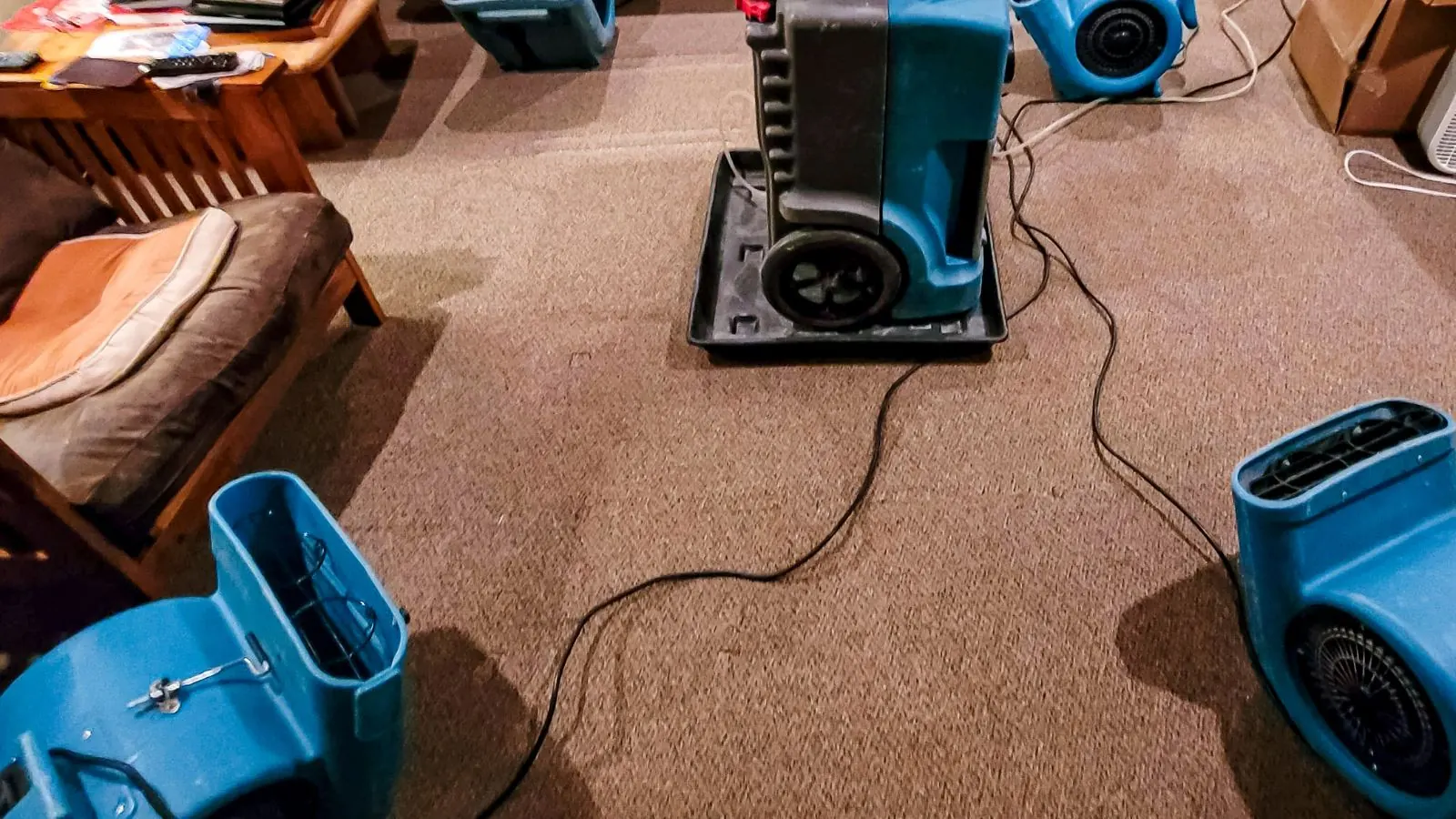
Carpet water damage restoration is the extraction and drying of carpet and its pad after water has soaked them, and the decision about what to keep or replace. In a Morganville home, wet carpet is common after a pipe break, an appliance leak or a basement seep. The key questions are where the water came from and how long the carpet stayed wet.
Clean-water losses caught early often let carpet be dried and cleaned, while the pad underneath is usually replaced. Carpet soaked with sewage or flood water is removed, as covered under sewage backup cleanup and flood damage restoration.
What decides whether wet carpet is saved
- The water category, because contaminated water means removal.
- Time wet, with 24 to 48 hours as the usual window for clean water.
- Backing type and age, because older carpet may delaminate.
- Whether the pad and subfloor can be dried.
The EPA advises drying wet materials within 24 to 48 hours to limit mold growth. After that window, the odds fall, and a musty smell often follows.
What to do right away
Stop the source
Close the shutoff valve or the main.
Remove furniture
Lift furniture off the carpet and put foil or plastic under any legs left standing.
Do not walk on it
Walking on soaked carpet spreads water and can damage backing.
Extract and ventilate
Wet vacuum standing water on dry ground, and run a dehumidifier and fans.
How carpet drying works
Extraction wands pull water from the carpet and pad. In many cases the carpet is lifted and the pad is removed, so air can reach the subfloor. Air movers dry the carpet from both sides, and a dehumidifier lowers the room humidity, following the ANSI/IICRC S500 standard. Readings in the subfloor confirm dryness.
| Carpet situation | Usual decision | Reason |
|---|---|---|
| Clean water, caught within a day | Dry carpet, replace pad | Carpet fibers tolerate it, pad holds water. |
| Clean water, wet for several days | Replace carpet and pad | Backing can delaminate, odor can set in. |
| Washing machine or ground water | Often replace | Category 2 water carries more risk. |
| Sewage or flood water | Remove and discard | Category 3 water is contaminated. |
Subfloor matters as much as the carpet. Wet plywood or particleboard subfloor needs drying and sometimes replacement. A musty smell after the carpet has been dried can indicate moisture left behind, which structural drying addresses. See structural drying and dehumidification.
Odor, stretching and what to expect afterward
Carpet that dries properly usually smells like carpet again. A sour or earthy smell after drying means moisture is still trapped in the pad, the backing or the subfloor, and it should be rechecked before the room is closed back up. Stretching is common too, because wet fibers and backing relax, and a carpet installer can re-stretch it once the floor beneath is dry.
Dye transfer is another surprise. Colors from furniture stain, cardboard and wet rugs can bleed into light carpet within hours, so lift items early and keep wet cardboard off the floor. Photograph any staining before cleaning, since a before-and-after record helps when you discuss the loss with your insurer.
Carpet wet? Call and tell us how long it has been that way.
Call (732) 352-9660What changes the cost of carpet water damage restoration
Water category
Contaminated water means removal.
Room size
The footprint sets equipment and labor.
Pad and subfloor
Pad replacement and subfloor drying add scope.
Carpet type
Wool, nylon and synthetic backings respond differently.
Replacement
New carpet and pad are separate from mitigation.
Insurance usually responds to sudden loss. Check your policy and ask your insurer. Want your real number? Call (732) 352-9660.
Related work and nearby towns
Hardwood in the next room has its own plan, covered under hardwood floor water damage repair. Wet carpet in a lower level is also covered under basement water damage cleanup. We serve carpets in Cliffwood and nearby towns.
Frequently asked questions
Sometimes. The carpet is lifted, the pad is removed and air is directed beneath it. It depends on the water category and time wet.
Usually. Pad absorbs a lot of water and is cheap to replace compared with the risk of leaving it wet.
Find and dry the moisture. A smell that persists after drying can mean moisture left in the subfloor.
Wet carpet can stretch and need restretching after drying.
Sudden events are often covered. Check your policy and ask your insurer.