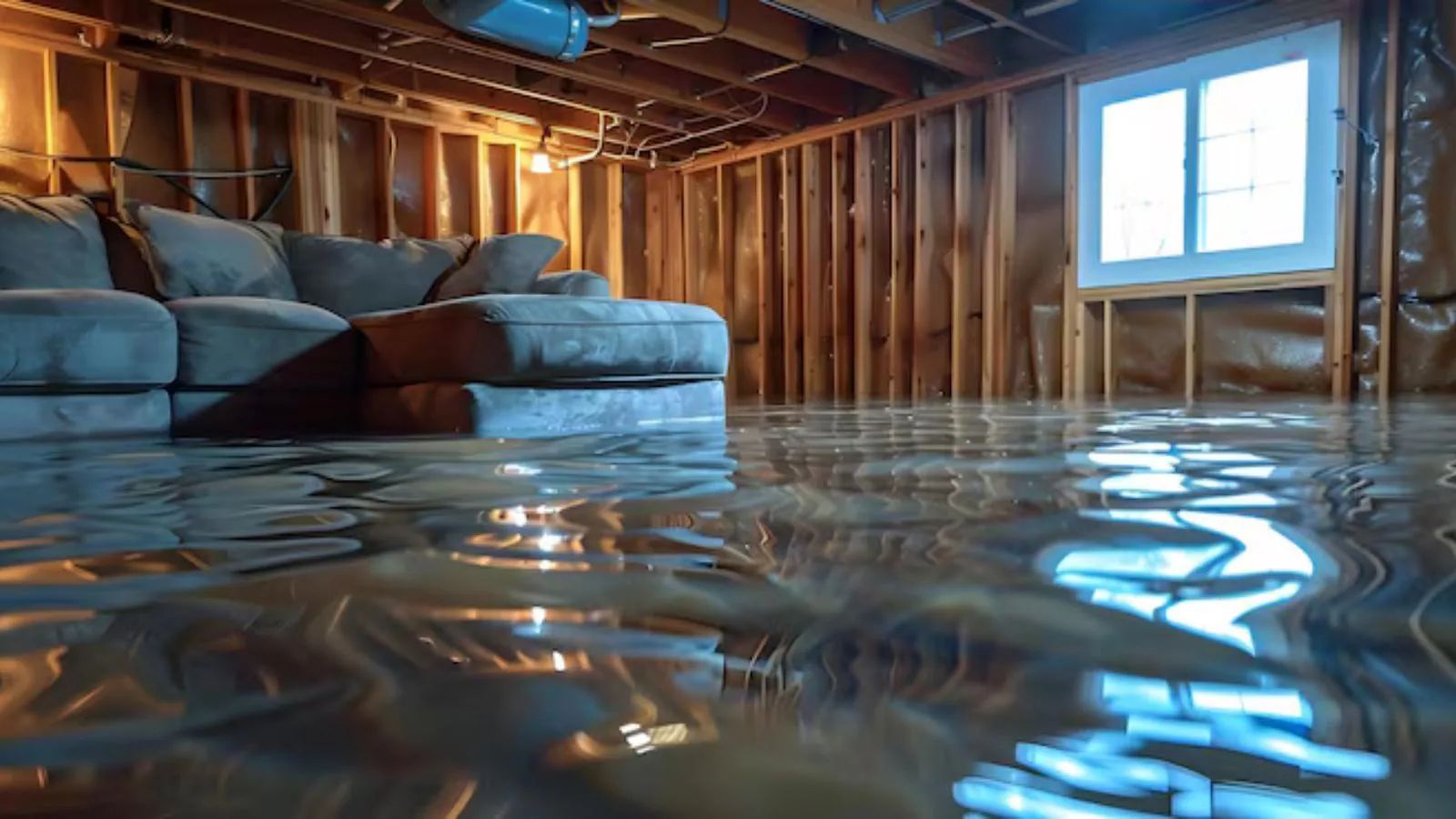
Basement water damage cleanup is the removal of standing water, the cleaning of contaminated areas and the drying of floors, walls and stored contents in the lowest level of a house. In Morganville, basements are one of the most common places water collects after heavy rain, a failed sump pump or a plumbing break. The emergency line is open 24 hours a day, every day.
This page is about restoration, which is what happens after water gets in. It is not waterproofing, which is a separate trade that prevents future entry through drainage, grading and wall sealing. We explain the difference during the call, and we can tell you what we see so you can talk to a waterproofing contractor.
Water in the basement is an emergency
Stay off the stairs if water is deep
Water reaching outlets, the panel or a furnace is an electrical hazard.
Do not use the panel in wet conditions
If power must be shut off and you cannot reach the panel dry, call 911 or the electric utility.
Find the source
A pipe, a water heater, a drain or the ground. Tell us when you call.
Lift contents
Raise valuables and papers to upper floors. Cardboard on a wet floor absorbs water quickly.
Where basement water comes from
- Heavy rain and saturated ground pushing water through walls or floor joints.
- Sump pump failure or a power outage during a storm.
- Plumbing breaks, water heaters and washing machine hoses.
- Sewer or floor drain backups.
- Window wells that fill and leak.
The source decides the water category. Clean supply water is Category 1. Water from the ground or a washing machine is generally Category 2. A sewer backup is Category 3 and is described under sewage backup cleanup.
Finished and unfinished basements need different work
An unfinished basement with a concrete floor and bare walls is mostly a pumping and cleaning job. A finished basement adds carpet, pad, drywall, insulation, trim and sometimes cabinets or built-ins. Those materials hold water, and depending on the category they are removed or dried.
| Basement type | Typical work | What often gets removed |
|---|---|---|
| Unfinished | Pump, clean, dry the slab and walls | Stored cardboard and soft goods. |
| Finished with carpet | Pump, remove pad, dry the slab | Pad, lower drywall, wet insulation. |
| Finished with laminate or vinyl | Pump, lift floor to dry beneath | Swelled flooring, base trim. |
How drying a basement works
Basements are cool and humid, so drying takes longer. Dehumidifiers do most of the work, and air movers push air across concrete and walls. Moisture readings in the slab and the framing tell us when the job is done, in line with the ANSI/IICRC S500 standard. The EPA advises drying wet materials within 24 to 48 hours to limit mold growth.
Local rainfall matters. Rutgers reports about 47.6 inches of precipitation in a normal year across New Jersey, and the remnants of Ida in 2021 led to township flood and tornado watch updates in Marlboro. After a storm like that, a sump pump that fails or loses power is often the reason a basement floods.
Basement flooded? Call the line and we plan the pumping and drying.
Call (732) 352-9660What changes the cost of basement water damage cleanup
Depth and area
Inches of water in one corner and a foot across a finished basement are different jobs.
Water category
Ground water and sewage add handling steps.
Finished or unfinished
Finished spaces add materials to remove and replace.
Contents
Stored belongings and furniture change the sorting and disposal.
Drying duration
Cool, humid basements take more days to dry.
Insurance depends on the cause. Water from a burst pipe is often covered, while groundwater seepage and flood typically need separate coverage. Check your policy and ask your insurer. Want your real number? Call (732) 352-9660.
Related work and nearby towns
The pumping step is described under water extraction, and the drying step under structural drying and dehumidification. We also cover basement calls from Matawan and nearby towns.
Frequently asked questions
Yes. Basements flood during storms at all hours, so the emergency line is answered around the clock, every day. Call (732) 352-9660.
Same-day response is offered when crews are available. In widespread storms no arrival time is promised.
No. We restore after water gets in. Waterproofing prevents water from getting in, and it is done by a waterproofing contractor.
For shallow water with the power off and no sewage, a pump can help. For deep water, electrical hazards or contaminated water, call a professional. Pumping too fast when the ground is saturated can stress the walls.
Not always. Clean-water losses caught early may dry in place. Contaminated water or long exposure often means removal of carpet, pad and lower drywall.
Cause decides it. Sudden pipe failures are often covered, while groundwater and flood usually need separate coverage.