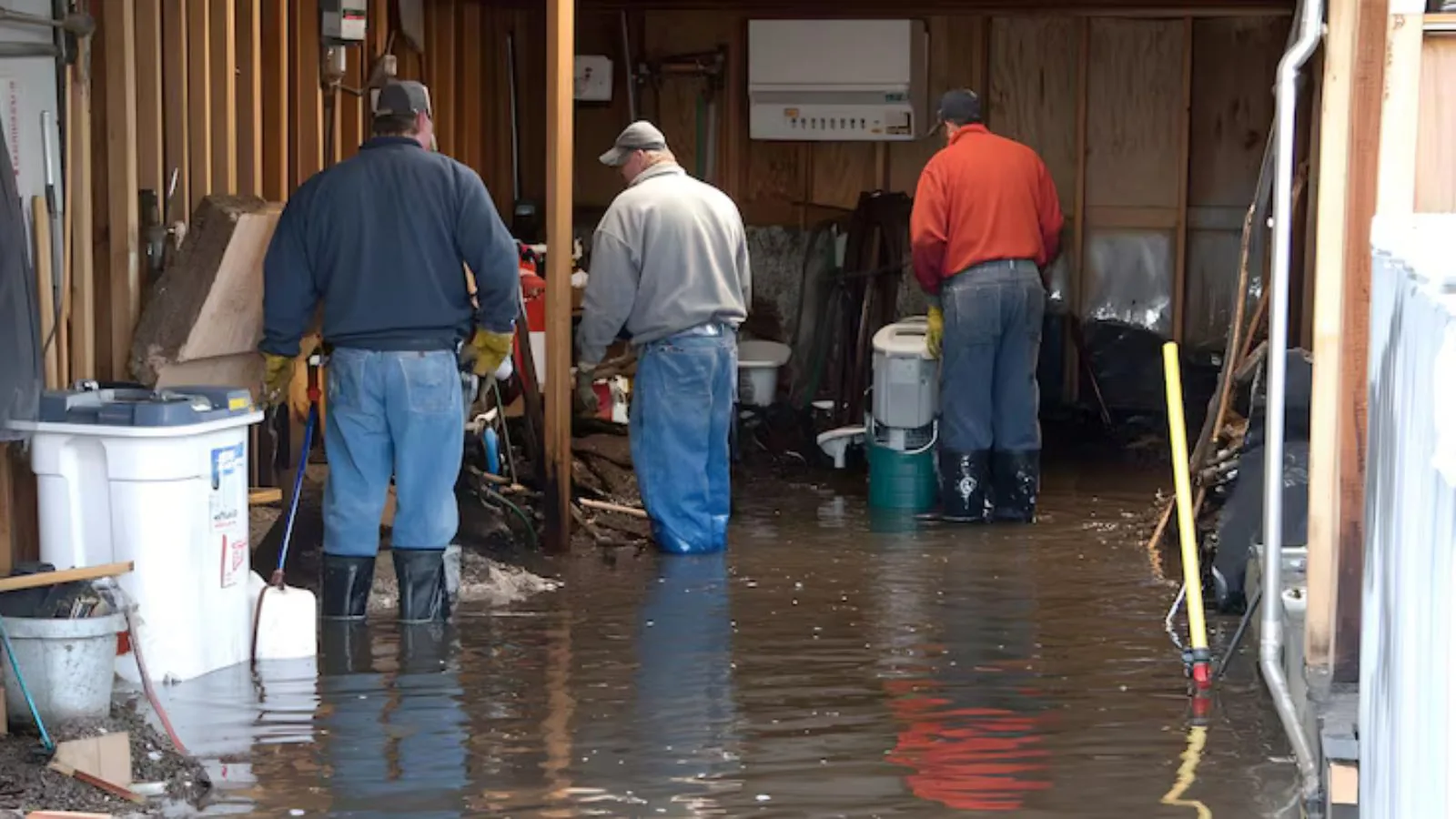
Gurgling drains, a backed-up toilet or a smell from the floor drain?
Early signs of a sewage backup are often small: drains that gurgle, a toilet that bubbles when a washer drains, water rising in a basement floor drain or a sewer smell where there should be none. A backup that reaches the floor is an emergency. The 24/7 line in Morganville answers every day, and the first step is to stop using water in the house.
Sewage water is Category 3 under the S500 standard, which means it may carry harmful bacteria and is handled with protective gear and strict containment. That is the reason this job is different from a clean-water leak. Porous materials that sewage touched are usually removed, not dried.
A sewage backup is an emergency
Stop using water
Do not run sinks, showers, toilets or washing machines. Every drop you add goes to the same blocked line.
Keep everyone out
Keep children, pets and anyone with a weakened immune system away from the affected area.
Do not clean it yourself
Avoid touching the water or scrubbing surfaces without protection. Wet vacuums spread contaminants.
Document it
Photograph the area from a safe distance before cleanup. This helps with your insurer and with the plumber.
Sewer or septic: it depends on your address
Properties in Morganville are on public sewer or private septic depending on the street. Marlboro Township's code refers to the Western Monmouth Utilities Authority, so the township or the utility can tell you which applies to your address. That matters because a blocked municipal main and a failed septic system have different owners and different fixes.
If the backup affects several neighbors, the problem may be in the main. If it affects only your home, the blockage is likely in your own lateral. A plumber with a camera can tell which, and we handle the contaminated area either way.
How sewage cleanup works
Crews wear protective gear and set up containment so that contamination does not travel to clean rooms. Standing liquid is extracted, then porous materials such as carpet, pad, insulation and low drywall are removed. Hard surfaces are cleaned and treated with an antimicrobial, and the area is dried with air movers and dehumidifiers.
| Material | After sewage contact | Why |
|---|---|---|
| Carpet and pad | Removed and discarded | They cannot be cleaned reliably. |
| Drywall in contact | Cut out above the water line | Gypsum absorbs contaminated water. |
| Concrete floor | Cleaned, treated and dried | Hard surfaces can be disinfected. |
| Stored boxes and soft goods | Usually discarded | Porous items keep contamination. |
Ask your insurer about water backup coverage. Many homeowners policies exclude sewer backup unless an endorsement was added, so check your policy before you assume either way.
Large-lot neighborhoods such as Winding Brook can include homes on private septic systems, so find out whether your home is on septic or public sewer before you call a plumber.
Sewage on the floor? Call the line before anyone touches it.
Call (732) 352-9660What changes the cost of sewage backup cleanup
Area and depth
A bathroom floor and a flooded basement are very different scopes.
Materials removed
Carpet, pad, insulation and drywall removal adds labor and disposal.
Containment and protective gear
Category 3 work needs more setup than clean-water work.
Drying and treatment
Equipment runs until readings are normal.
Plumbing repair
Clearing the line or replacing a lateral is a plumber's job and a separate cost.
Want your real number? Call (732) 352-9660. We explain scope and price before the work starts.
Related work and nearby towns
When the backup flooded the lowest level, basement water damage cleanup describes the rest. Large outdoor water events that overwhelm drains are covered under flood damage restoration. We also take calls from Spotswood and other nearby towns.
Frequently asked questions
Yes. Sewage does not wait for the morning, so the emergency line is staffed around the clock, every day. Call (732) 352-9660 and we explain safe next steps.
Same-day response is offered when crews are available, with no promised arrival window.
It can carry harmful bacteria, so avoid contact and wear protective gear if you must enter. Keep children and pets out. Questions about health effects belong with a physician.
Often only with a sewer backup endorsement. Check your policy and ask your insurer.
The township or the utility authority can tell you by address. A plumber can also identify it.
No. Bleach does not make sewage-soaked porous materials safe, and mixing bleach with other cleaners such as ammonia creates dangerous fumes. Leave Category 3 cleanup to trained crews.