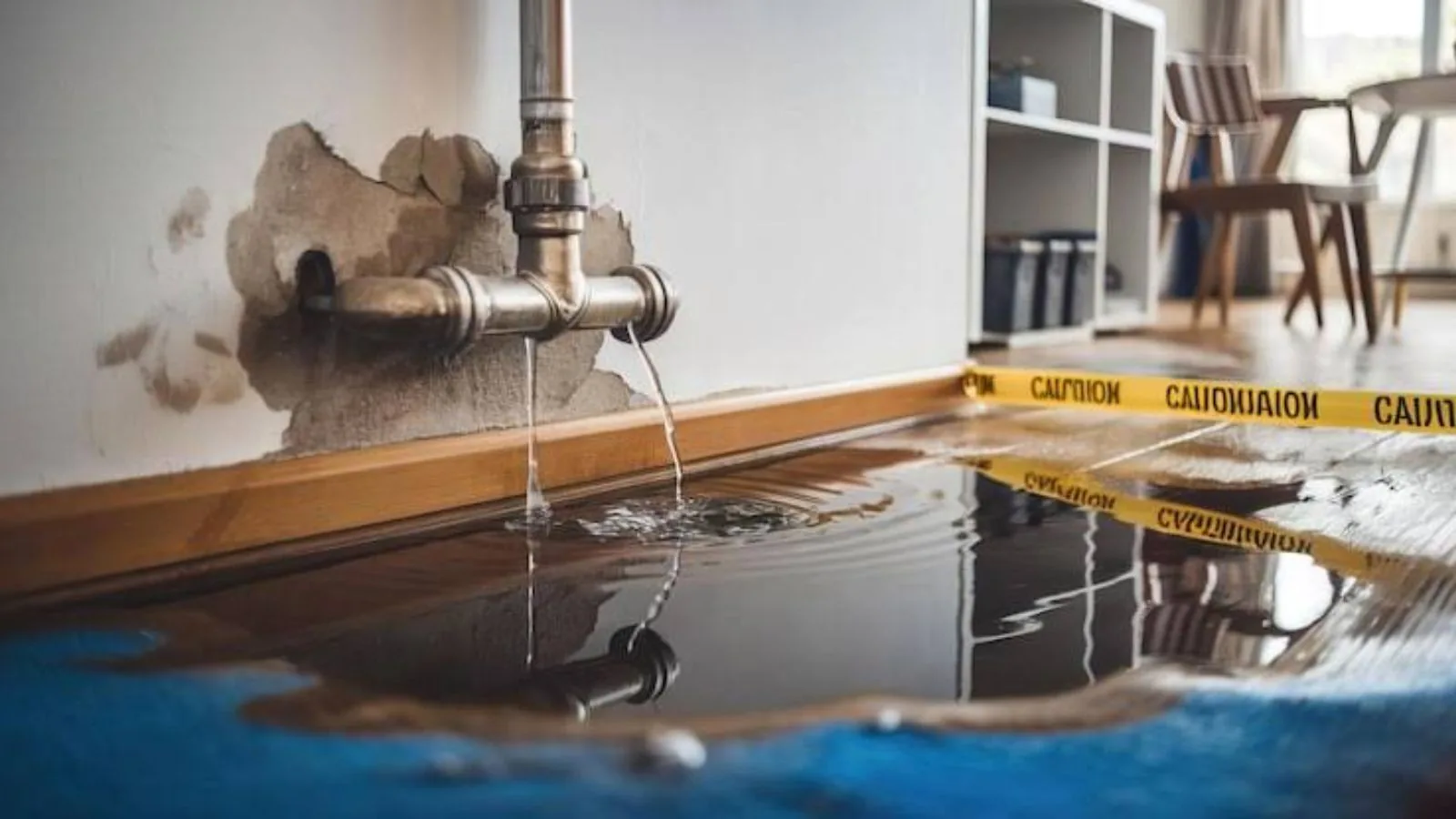
Burst pipe water damage starts the moment a pressurized supply line splits, and the water keeps coming until someone closes a valve. In Morganville that means the main shutoff inside your home is the first thing to find, and the emergency line is open 24 hours a day if you need help finding it. Everything else, from extraction to drying, depends on how long the line ran.
A pipe break is different from a leaking drain or a slow seep, because supply lines run at full household pressure and can release a lot of water in a short time. After the shutoff, the real work is finding every place the water went, including wall cavities and ceilings below the break. Wet walls are covered in more detail under wall and drywall water damage repair.
A pipe burst: what to do in the first ten minutes
Shut the main
Turn the main water valve clockwise until it stops. If it will not turn or you cannot find it, say so when you call and we talk you through the alternatives.
Open one faucet low
Open the lowest cold tap to drain the pipes. That relieves the pressure and slows any remaining water.
Mind the electricity
Do not touch outlets, switches or appliances in wet areas. If water is dripping through a light fixture, stay away from it and call 911 or the electric utility.
Document, then dry
Photograph the break and the wet areas before cleanup. Then start moving belongings out of the water's path and call the emergency line.
Where the water supply comes from in Morganville
The Marlboro Township Division of Water Utility supplies Morganville, drawing on five groundwater wells and on surface water the township buys from the Middlesex Water Company. The valve inside your home is yours to operate, but a failure on the street side of your property line is the utility's to repair. If the break appears to be outside the house, call the township water utility as well as us.
That distinction saves time, because a plumber or a restoration crew can only work on the home side. We deal with the water that got into the building, and a licensed plumber repairs the pipe itself.
Signs a pipe has already burst or is failing
- A sudden drop in water pressure, or running water sounds with every tap closed.
- A wet spot or stain that spreads across a ceiling, a wall or a floor within hours.
- Warped baseboards, bubbling paint or a damp, musty smell where nothing was wet before.
- A water meter that keeps moving when every fixture is off.
How burst pipe damage is cleaned up
Extraction comes first, then moisture mapping. A moisture meter and a thermal camera locate water behind drywall, under cabinets and inside the ceiling below. Drywall and insulation that stayed wet are often cut out, since they hold water long after the surface dries.
Air movers and dehumidifiers then run until the readings match dry reference values. Most supply line breaks involve clean water, which is Category 1 under S500, so the focus is speed and thorough drying rather than disinfecting contaminated material.
| Where the pipe broke | Where water usually travels | What to expect |
|---|---|---|
| Under a sink or behind a vanity | Cabinet floor, then subfloor | Cabinet bases and flooring often need drying or replacement. |
| Inside a wall | Down the cavity to the sill plate | Cut-outs at the base of the wall and drying through them. |
| Above a ceiling | Insulation, then drywall below | Ceiling sections come down once they sag or stain. |
| In a basement or utility room | Floor, wall bases, stored items | Extraction, then drying of framing and contents sorting. |
Pipe still running or already shut off? Call and we plan the next step together.
Call (732) 352-9660What changes the cost of burst pipe cleanup
How long the pipe ran
A pipe caught in minutes is a small job. One that ran overnight or while you were away can soak several rooms.
Rooms and floors affected
Water that reached a second floor ceiling or a finished basement multiplies the area to dry.
Materials hit
Drywall, carpet pad and insulation are removed more often than hardwood or tile, which are frequently dried in place.
Drying equipment and days
Counts follow moisture readings. Wet cavities take longer than wet surfaces.
Repairs afterward
Replacing cut-out drywall, paint and flooring is scoped as a separate rebuild.
Homeowners policies often cover sudden and accidental water damage from a burst pipe, but they frequently exclude damage from a leak that went unnoticed for a long time.
New Jersey's Department of Banking and Insurance advises policyholders to call their agent or insurer as soon as possible after a loss, keep the claim number and save documentation. We explain the scope and the price before work starts, and a written scope helps when you talk to your insurer. Want your real number? Call (732) 352-9660.
Related work and nearby towns
A pipe that failed under the sink usually leaves cabinet and floor damage, which kitchen water damage restoration covers in detail. Once the water is out, structural drying explains how we know the framing is dry. Calls also come in from Cliffwood and neighboring towns.
Frequently asked questions
Yes. Pipes tend to fail at the worst hours, so the emergency line is staffed 24 hours a day, every day. Call (732) 352-9660 after you close the main valve and we plan extraction and drying.
Same-day response is offered when crews are available, without a promised arrival window.
A licensed plumber repairs or replaces the pipe. We handle the water damage that the break caused. In New Jersey, contractors doing residential home improvement are required to register with the Division of Consumer Affairs, and you can look up any contractor in the Division's database.
Tell us when you call. Depending on the house, there may be a second shutoff at the water heater, at a fixture, or at a valve outside. If water is still running, call the township water utility as well, since the valve at the property line is theirs.
Drywall that is soaked through and sagging often comes out right away. Drywall that is only damp at the surface can sometimes be dried in place, and moisture readings settle that. The EPA advises drying wet materials within 24 to 48 hours to limit mold growth.
Many policies cover sudden and accidental pipe breaks but not long-term leaks. Check your policy and ask your insurer. We do not promise any claim outcome.