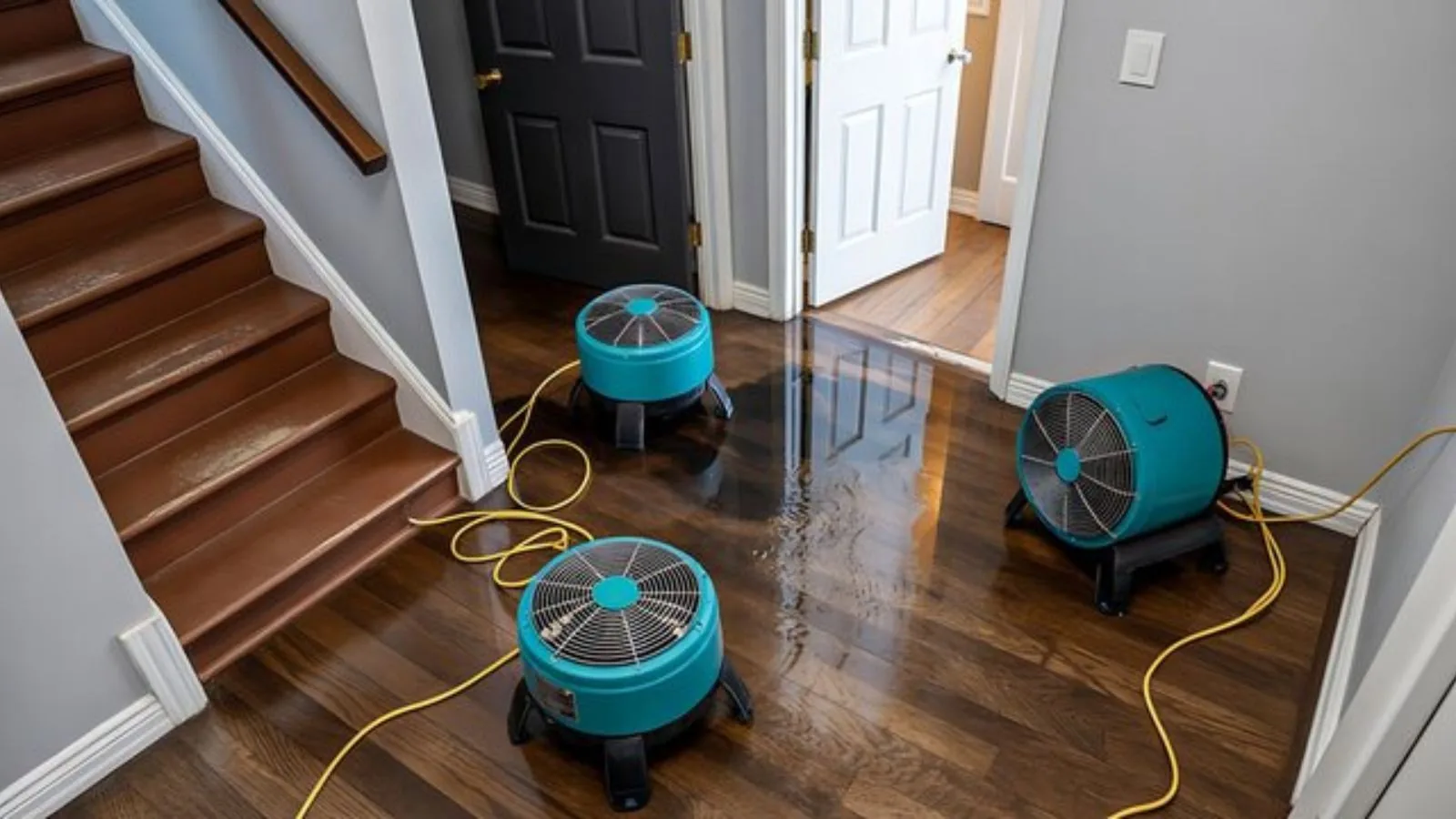
Floors feel soft, rooms smell musty or humidity will not drop after a leak?
If a leak has been mopped up but a room still smells damp, the baseboard looks stained, the floor feels spongy or a dehumidifier keeps filling, there is probably moisture left in the structure. Water soaks into drywall, subfloors, framing and insulation, and it dries slowly unless airflow and dehumidification are managed. This page explains how structural drying works and when it is needed.
Structural drying is the controlled removal of moisture from building materials using air movers, dehumidifiers and moisture readings. It follows water extraction and is not an emergency by itself, but it is time-sensitive. The EPA advises drying wet materials within 24 to 48 hours to limit mold growth, and the longer the wait, the more material may need removal.
Signs moisture is still in the structure
- A musty smell that comes back after cleaning.
- Baseboards or drywall that feel cool or damp to the touch.
- Paint that bubbles or peels, or wallpaper that lifts.
- Floors that cup, buckle or feel soft underfoot.
- Indoor humidity that stays high with a dehumidifier running.
A moisture meter reads moisture inside materials, and a thermal camera shows cold, wet areas behind surfaces. Together they find what the eye cannot. We check beyond the visible stain, because water travels.
How structural drying works
Air movers circulate air across wet surfaces to speed evaporation. Dehumidifiers pull the moisture out of the air so it does not settle back into materials. In some cases small holes or openings are made so air can reach a wall cavity or a floor system.
Readings are taken at the start and on later visits. A wet material is compared with a dry reference reading from similar material in an unaffected area. When the wet area matches the reference, the structure is considered dry. This is how the S500 standard approaches drying: measured goals, not time spent.
| Material | Drying approach | Typical concern |
|---|---|---|
| Drywall | Air movers, cavity drying, sometimes removal | Holds water and can degrade. |
| Wood framing and subfloor | Dehumidification and airflow | Dries slowly and must be verified. |
| Concrete | Dehumidification, long duration | Holds moisture for days. |
| Insulation | Often removed | Stays wet and heavy. |
Why drying takes days, not hours
Humidity is the limit. Summer air in coastal New Jersey is humid and winter air is dry but cold. Both affect drying speed, and a closed room with dehumidifiers dries faster than an open one. Equipment is monitored and adjusted so the work stops when readings say so, not on a fixed schedule.
What to do while equipment runs
Keep doors and windows closed in the drying area so the dehumidifiers work on the moisture in the structure and not on outdoor air. Do not turn off or move equipment, and keep children and pets clear of cords. Expect the room to feel warm and noisy, since dehumidifiers and air movers give off heat.
Check in with the crew if a smell changes, if something looks different or if you see new staining. Those are useful clues about where moisture is still moving.
In large custom homes such as those in Georgetown Estates, drying equipment may need to run on more than one level, and the moisture readings decide when it can stop.
Not sure whether it is dry? Call and we explain what readings would settle it.
Call (732) 352-9660What changes the cost of structural drying
Wet area and materials
A wet slab, wall cavities and subfloor take different time.
Equipment count and days
Units and duration follow the readings.
Water category
Contaminated water adds cleaning and removal.
Access
Cabinets, built-ins and tight spaces affect airflow.
Monitoring visits
Readings over several days are part of the job.
Insurers often ask for drying logs and moisture readings, so keep copies. Check your policy and ask your insurer what documentation they want. Want your real number? Call (732) 352-9660.
Related work and nearby towns
Standing water comes out first under water extraction. If a musty smell persists after drying, mold remediation explains assessment and the next steps. Homes in Spotswood and nearby towns call us for drying too.
Frequently asked questions
Often three to five days, though it can be shorter or longer depending on materials, humidity and how much water was involved. Readings decide, not a calendar.
For a small spill, yes. For wet walls, subfloors and large areas, consumer equipment is usually too weak, and without readings you cannot tell when you are done.
Moisture meter readings are compared with a dry reference reading from similar materials in an unaffected area.
Mold needs moisture, so removing moisture quickly is the main protection. The EPA recommends drying wet materials within 24 to 48 hours.
Yes, air movers and dehumidifiers use electricity. Ask about expected equipment and duration when you get the scope.