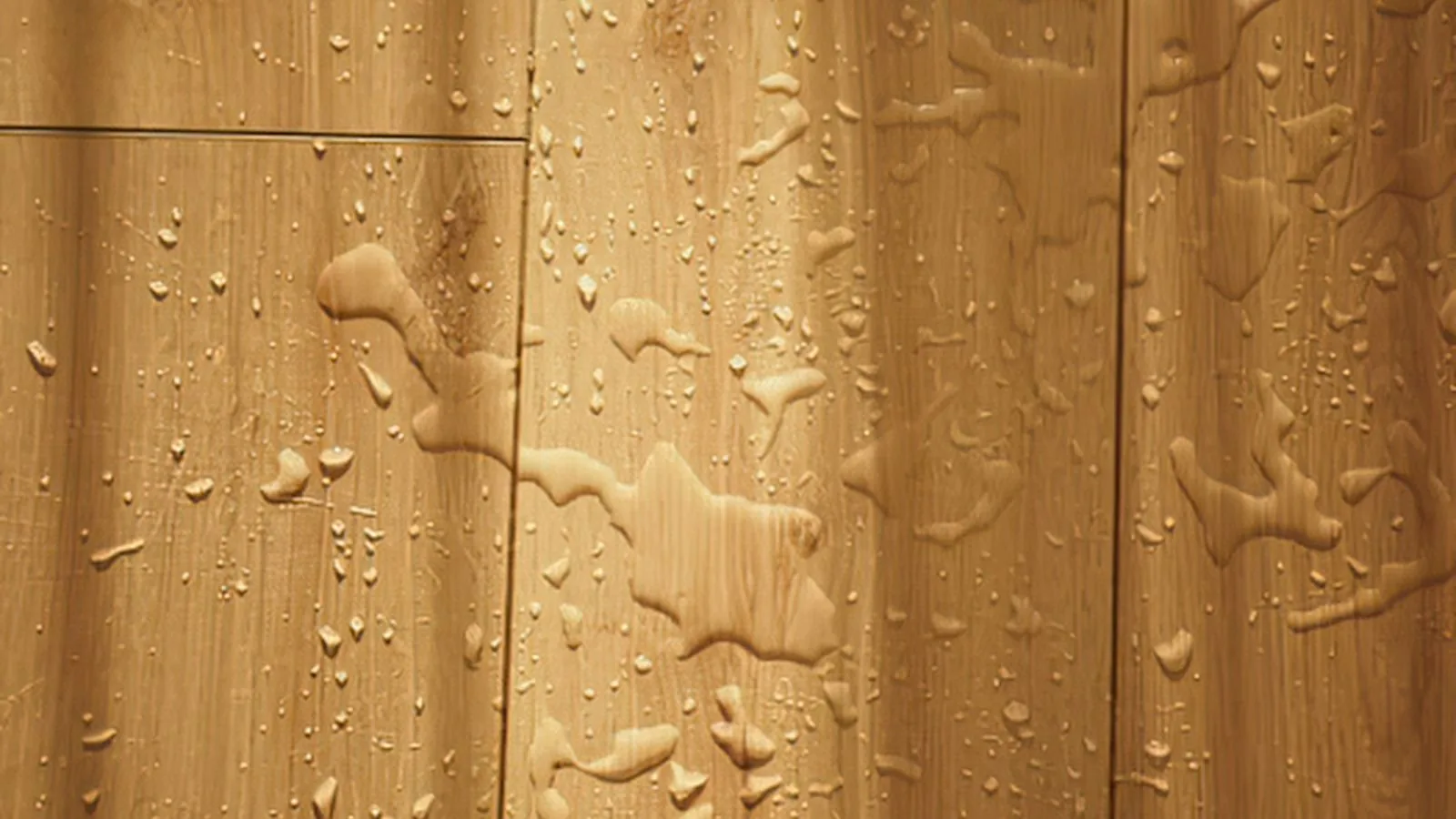
Hardwood floor water damage repair is the drying, and where needed the refinishing or replacement, of wood flooring that has absorbed water. Wood takes on water slowly, then swells, so the damage often shows a day or more after the leak. If your hardwood in Morganville has been wet, the first step is to stop the source and start drying quickly.
Time is the main factor. Floors dried within days often recover, while floors left wet for a week or more are more likely to cup, buckle or stain. Our assessment uses a moisture meter, not appearance, because the surface can look fine while the boards and subfloor are still wet.
What water does to hardwood
- Cupping, where board edges rise higher than the center.
- Crowning, where the center rises after a cupped floor is sanded too early.
- Buckling, where boards lift off the subfloor.
- Dark staining and gray patches where water sat.
- Gaps between boards as the wood dries and shrinks.
Cupping can ease as the wood dries, and a floor that has fully dried should be reassessed before anyone sands or refinishes it. Sanding too early traps moisture and leads to crowning.
What to do first
Stop the water
Close the shutoff valve or the main, and fix or isolate the source.
Remove standing water and rugs
Mop and vacuum standing water, and pull rugs and mats off the floor.
Do not use heat
Avoid heat guns and blow dryers. Rapid drying can crack and warp boards.
Run air gently
Use fans and a dehumidifier while you wait for the assessment.
Solid, engineered and laminate flooring
Solid hardwood can often be dried and refinished if caught in time. Engineered wood has a plywood core and a thin hardwood layer, so it can swell and delaminate and is replaced more often. Laminate is a fiberboard product and almost never recovers. Knowing which you have changes the plan.
| Floor type | Recovery after water | Notes |
|---|---|---|
| Solid hardwood | Often recoverable if dried fast | May need refinishing. |
| Engineered wood | Mixed | Thin top layer can delaminate. |
| Laminate | Rarely recoverable | Swells and does not return to shape. |
How hardwood drying works
Specialized drying mats and air movers pull moisture from the boards and the subfloor, in line with the ANSI/IICRC S500 standard. In some cases boards are removed along an edge to improve airflow. Readings are taken daily, and the floor is considered dry when the boards match the reference reading for the room's normal moisture level.
Crawl spaces and basements below a hardwood floor should be checked too. See crawl space water damage if moisture comes from below. The EPA advises drying wet materials within 24 to 48 hours, which is a target for any wet floor.
What a good outcome looks like
A floor that was wet briefly with clean water often flattens as it dries, and a light sanding and refinish brings back an even surface. A floor that stayed wet longer may keep some cupping, develop gaps or darken, and the honest options become refinishing around the damage, replacing a section or replacing the room.
Matching new boards to old ones is its own task, since species, width, stain and age all affect the result. A flooring contractor handles that part, and we hand over moisture readings and a written scope so the contractor knows the floor is dry before work begins.
Hardwood wet or cupping? Call and we assess it with a moisture meter.
Call (732) 352-9660What changes the cost of hardwood floor water damage repair
Floor type
Solid, engineered and laminate respond differently.
Time wet
Floors dried in days recover better than those wet for weeks.
Area
The footprint decides equipment and refinishing scope.
Subfloor condition
Wet subfloors add drying time.
Refinishing or replacement
Sanding, staining and new boards are separate from drying.
Insurance typically responds to sudden leaks. Check your policy and ask your insurer. Want your real number? Call (732) 352-9660.
Related work and nearby towns
For carpeted rooms, see carpet water damage restoration. Leaks from a kitchen are covered under kitchen water damage restoration. We help floors in Matawan and nearby towns too.
Frequently asked questions
Often, if it is dried promptly and has not been wet for long. Moisture readings and a visual check decide.
No. Sanding before the wood is fully dry can lead to crowning and trapped moisture.
Until readings confirm the floor and subfloor are dry. That can take days to weeks depending on the event.
Yes. It has a thin hardwood layer over plywood and can delaminate, so it is replaced more often.
Sudden leaks are often covered. Check your policy and ask your insurer.