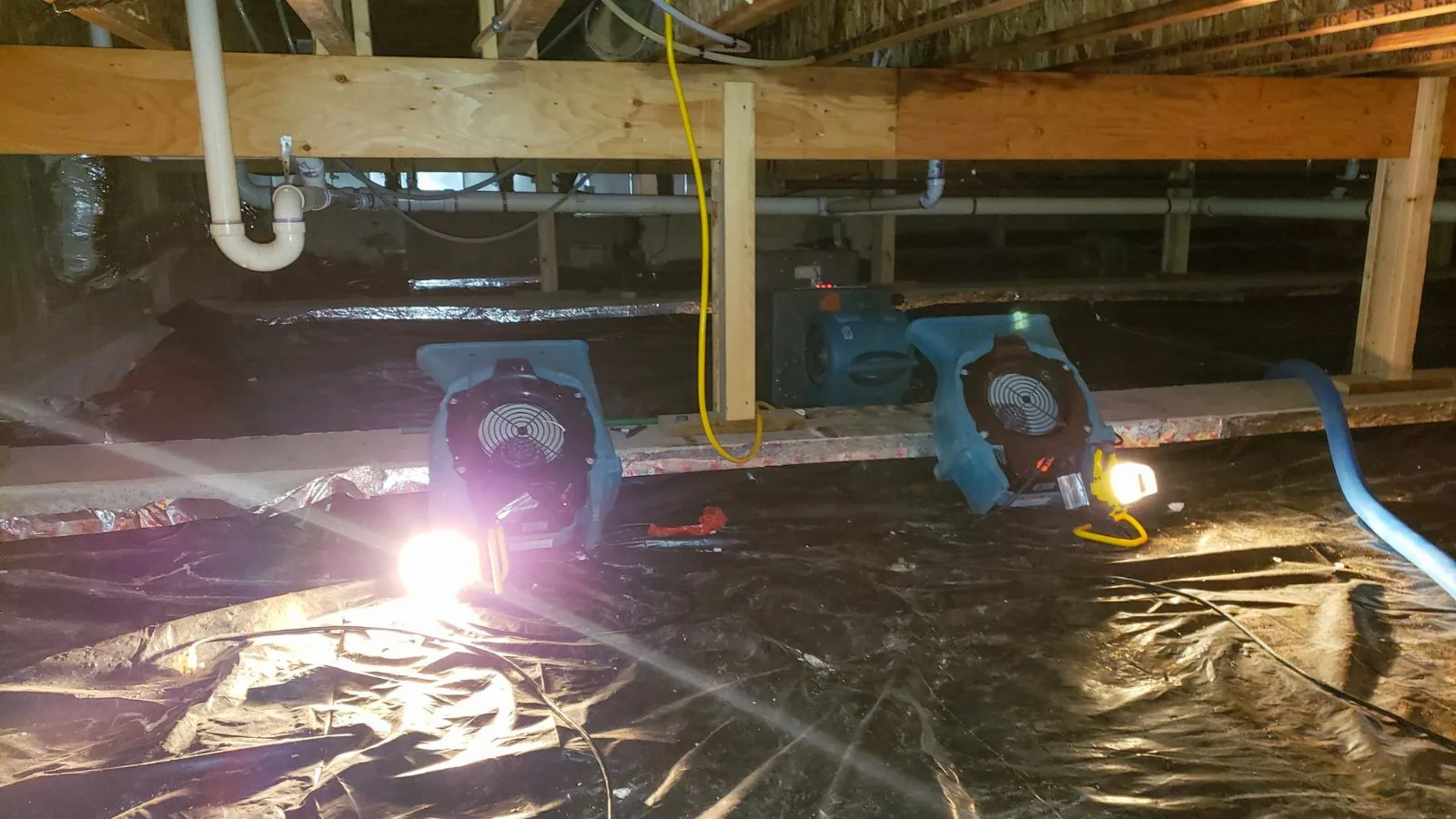
Crawl space water damage is water in the low, unfinished space under a house, along with the wet insulation, framing and subfloor above it. In Morganville, crawl spaces collect water from heavy rain, a high water table, a plumbing leak or poor drainage around the foundation. Because the space is closed and dark, moisture lingers and spreads to the floors above.
A wet crawl space is often not a sudden emergency, but water standing next to the framing is a problem that grows. We pump out standing water, dry the space and check what the moisture has done to insulation and the floor system. If the source is a pipe, burst pipe water damage explains that part.
Signs of a wet crawl space
- Standing water or damp soil visible through the access hatch.
- Sagging or wet insulation between floor joists.
- Floors above that feel cold, soft or bouncy.
- A musty smell that rises through floor vents.
- Wood that looks dark, soft or fuzzy.
Wear protective gear if you enter, and do not step into standing water near wiring. If you are not comfortable entering, we can assess it. Photograph what you see through the hatch from a safe position.
Safety steps before you look under the house
Do not enter a flooded crawl space, and do not reach into standing water near wiring or a water heater. Look through the hatch with a flashlight, photograph what you see and call for help. Crawl spaces can hold wet insulation, sharp debris and contaminated water.
Where crawl space water comes from
Rain runoff pooling around the foundation, a high water table after a wet season, a leaking pipe, a water heater or an AC drain line can all put water under a house. Rutgers reports roughly 47.6 inches of precipitation in a normal year across New Jersey, and after heavy storms the ground can hold water for days.
If the water is groundwater or runoff, a drainage or waterproofing contractor addresses the long-term entry. If the water is from a pipe or an appliance, a plumber fixes it. We deal with the water and the damage it did.
How crawl space cleanup works
A pump removes standing water, and then wet insulation is removed because it holds water against the framing. The ANSI/IICRC S500 standard guides that sequence. Moisture readings are taken in joists and the subfloor. A dehumidifier and air movers dry the space, and the crew confirms the wood is back to normal readings.
Mold needs moisture, and wood in a wet crawl space is a common place for it to start. The EPA advises fixing the water problem and drying wet materials within 24 to 48 hours. If growth is already visible, our mold remediation page explains assessment and cleanup.
| Condition | Likely action | Reason |
|---|---|---|
| Standing water | Pump out, dry soil surface | Water must leave first. |
| Wet fiberglass insulation | Remove and replace | It holds water against wood. |
| Damp joists | Dry and recheck readings | Wood can recover when dried in time. |
| Soft or rotted wood | Refer to carpenter | Structural repair is beyond drying. |
After the water: keeping the space dry
A crawl space that dried once can get wet again if the cause is not addressed. Gutters and downspouts should carry roof water well away from the foundation, soil around the house should slope away from it and any plumbing leak should be repaired. A ground-cover vapor barrier and, where appropriate, a sump or interior drain are jobs for the right contractor.
We leave you with moisture readings and photographs of the dried space, so you and your contractor know where things stood when we finished.
Water under the house? Call and tell us what you see through the hatch.
Call (732) 352-9660What changes the cost of crawl space water damage cleanup
Standing water depth and area
Larger areas need more pump time and drying.
Insulation
Removal of wet insulation adds labor and disposal.
Access
Low clearance slows work.
Moisture in framing
More wet wood means longer drying.
Drainage fixes
Drainage work and vapor barriers are separate trades.
Insurance depends on the cause. A pipe break is often covered, while groundwater seepage usually is not. Check your policy and ask your insurer. Want your real number? Call (732) 352-9660.
Related work and nearby towns
Wet floors above are covered under hardwood floor water damage repair and carpet water damage restoration. We also take crawl space calls from Matawan and nearby towns.
Frequently asked questions
Active flowing water is. Standing water is urgent but less so. Either way, call and we advise.
For slight dampness, maybe. For standing water, wet insulation or wet wood, drying requires more than a consumer unit, and readings are needed to confirm the result.
No. Encapsulation and drainage are waterproofing trades. We restore after water gets in.
Use protective gear and stay out of standing water near wiring. If unsure, let a professional assess it.
Rotted structural wood is a carpentry repair. We tell you what we find and what to ask a carpenter.