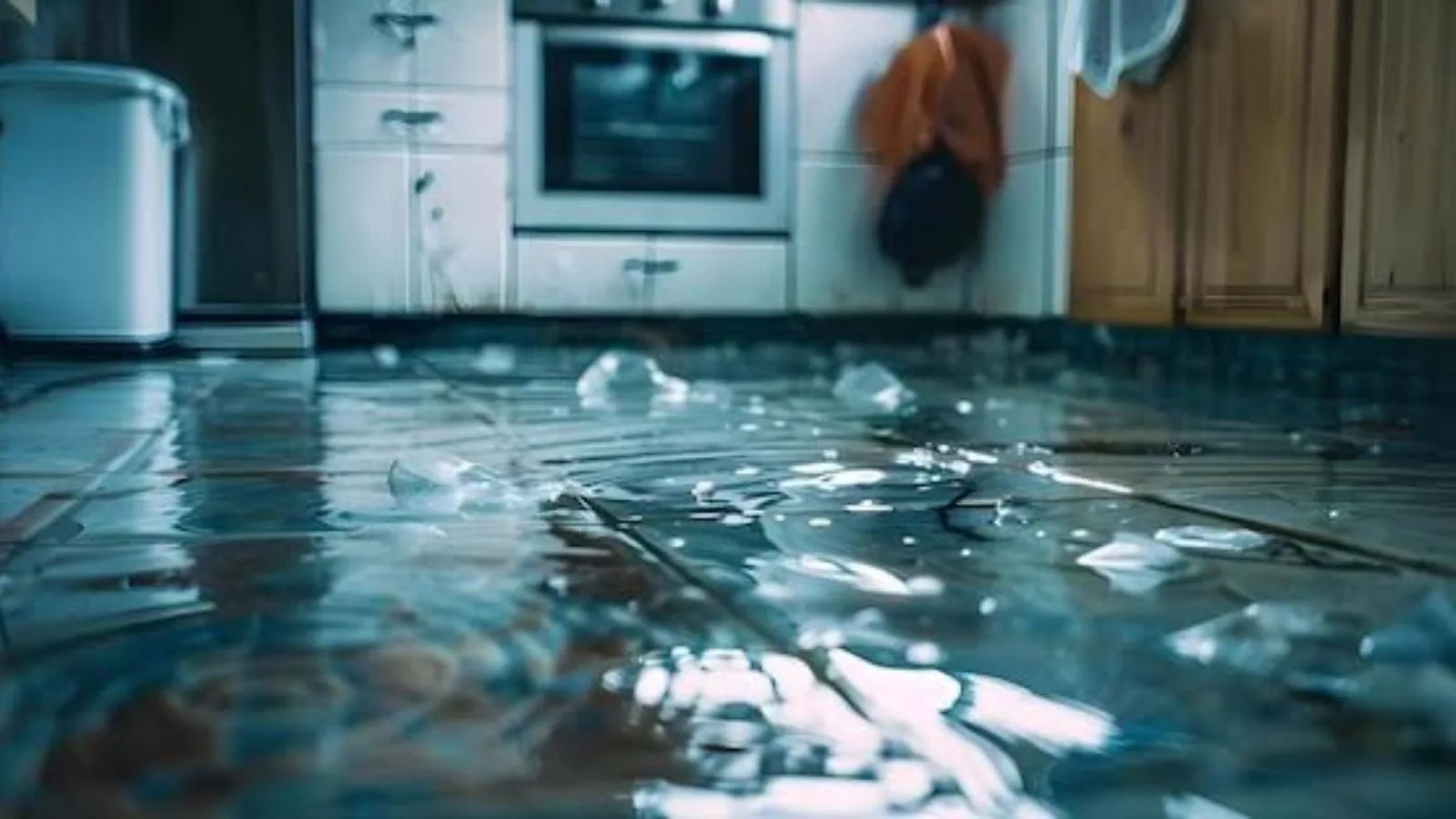
Appliance leak water damage is the damage from a washing machine, dishwasher, refrigerator or similar appliance that releases water through a hose, a valve or a drain. These leaks are emergencies when they run unseen, because the water travels under flooring. The 24/7 line in Morganville is open every day, and the first step is to close the appliance's supply valve.
This page is about the appliance failure itself. Water that reached the cabinets and the sink area is a separate job under kitchen water damage restoration, and a failed tank water heater sits under water heater leak cleanup. A hose that burst under pressure follows the same pattern as a burst pipe.
An appliance leak is an emergency: what to do first
Close the supply valve
Washers and dishwashers have shutoff valves on the wall or under the sink. Close them. For a refrigerator, shut off the line to the ice maker.
Unplug only if dry
Pull the plug only if you can reach it without standing in water. Otherwise cut power at the panel from dry ground or call 911 or the electric utility.
Pull the appliance out carefully
Once the power is off, slide it out to see the source and let air reach the floor.
Soak up what you can
Towels and a wet vacuum on dry ground reduce the spread.
Where appliance leaks come from
- Washing machine supply hoses that bulge, crack or pop off under pressure.
- Dishwasher inlet valves, door seals and drain hoses.
- Refrigerator ice maker and water dispenser lines.
- Clogged drain lines that overflow a standpipe.
Rubber washing machine hoses are a common failure, since they sit under constant pressure. A braided stainless replacement costs little compared with a flooded floor, and a plumber can fit one.
Why a hidden leak does so much damage
A small leak behind a refrigerator or inside a dishwasher cabinet can run for weeks before anyone notices. Water follows the subfloor and collects under cabinets or flooring, where it feeds mold growth. The EPA notes that moisture control is the key to mold control, so finding the wet area early is the point.
We use a moisture meter and a thermal camera to check the floor under and around the appliance. We then open the wall base or cabinet kick plate if the readings call for it.
How the cleanup works
Standing water is extracted, and any wet flooring or trim is assessed. Vinyl and tile are usually dried in place, while laminate and engineered wood often swell and are replaced. The ANSI/IICRC S500 standard guides which materials are dried and which are removed. Air movers and a dehumidifier finish the drying, and readings confirm it.
| Appliance | Common leak point | First move |
|---|---|---|
| Washing machine | Supply hose or drain standpipe | Close both wall valves. |
| Dishwasher | Inlet valve, door seal or drain hose | Close the under-sink supply valve. |
| Refrigerator | Ice maker or water line | Shut the line valve and unplug if dry. |
In established subdivisions such as Country Hills, washing machine hoses, dishwasher lines and water heaters are the maintenance items most worth checking.
Appliance leak spreading? Call the line and we help you sort out the next steps.
Call (732) 352-9660What changes the cost of appliance leak cleanup
Hours or weeks of leaking
A leak found in minutes is small. A leak found after weeks is a rebuild question.
Flooring type
Vinyl and tile dry in place more often than laminate or engineered wood.
Cabinets and wall bases
Adjacent cabinets and baseboards add scope.
Drying equipment
Counts follow readings, not guesses.
Replacement of the appliance
The appliance and its hose are separate from the water damage.
Homeowners policies often cover sudden appliance discharge but not wear, and they may not pay for the appliance itself. Ask your insurer and check your policy. We write a clear scope and explain the price before work starts. Want your real number? Call (732) 352-9660.
Related work and nearby towns
When the leak reached the next room, hardwood floor water damage repair and carpet water damage restoration explain those surfaces. We also respond to calls from Spotswood and from the other nearby towns.
Frequently asked questions
Yes. Appliances leak whenever they leak, so the emergency line is answered around the clock, every day. Call (732) 352-9660 once the supply is shut off.
Same-day response is offered when crews are available, with no promised arrival time.
Close the appliance's own valve. If the water stops, the appliance is the source. If it continues, the plumbing is, and the main valve should be closed.
Yes. Slow leaks can soak a subfloor and cabinets over weeks, and the damage often shows up as soft flooring or a musty smell.
Rubber hoses age and fail. A plumber or a capable homeowner can replace them with braided stainless lines, and it is worth checking them each year.
Sudden discharge from an appliance is commonly covered, while gradual leaks often are not. Check your policy and ask your insurer.