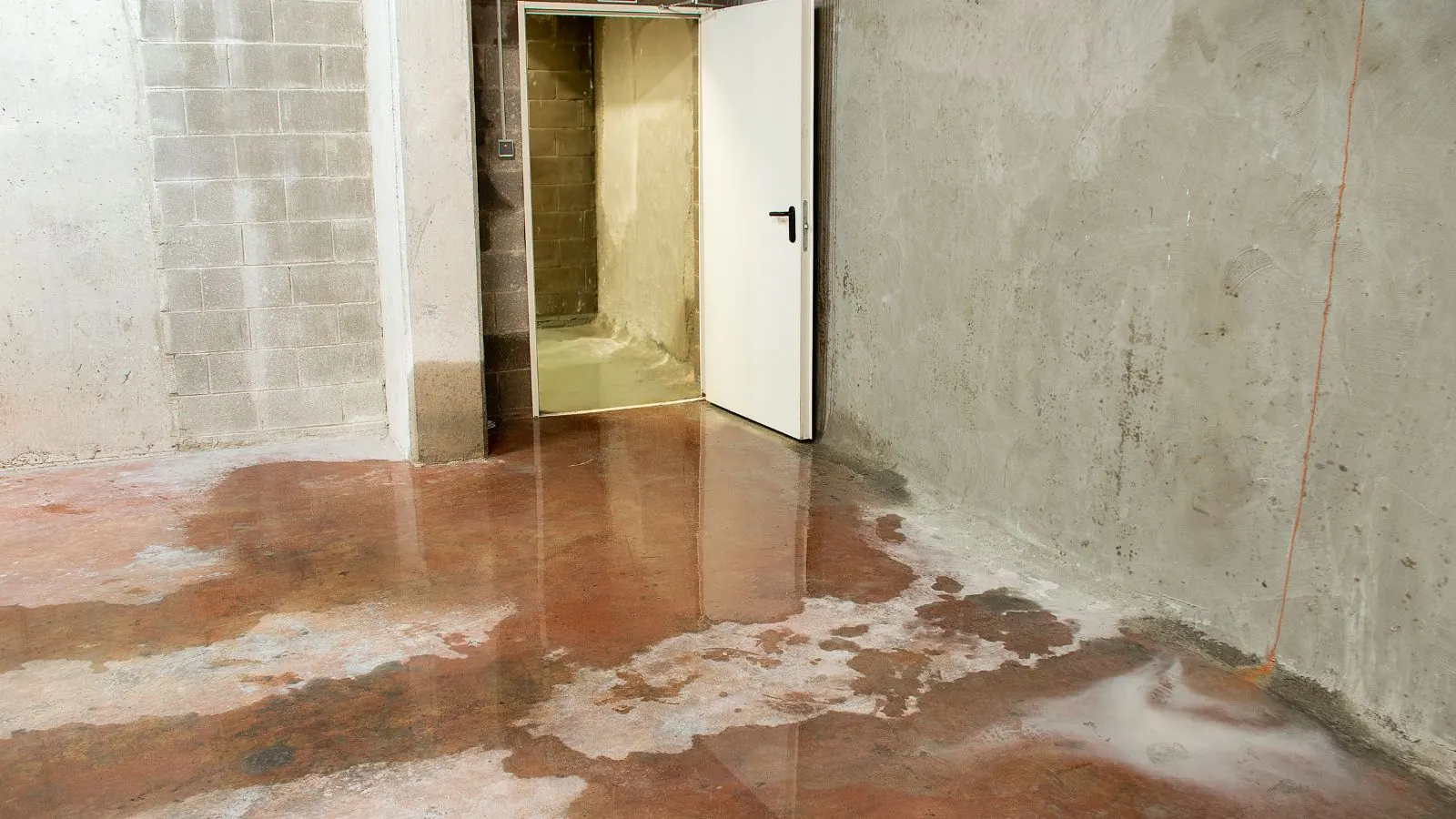
Warm spots, a spinning meter or damp flooring: could it be a slab leak?
A slab leak is a leak in a pipe that runs under or inside the concrete floor slab of a house. Homeowners in Morganville usually notice it indirectly: a floor that feels warm underfoot, a water bill that jumps, the sound of running water with every tap closed, or carpet and baseboards that stay damp for no visible reason. If water is also showing on the surface, treat it as an emergency and call the 24/7 line.
The pipe itself is a plumber's repair, and a leak detection company often locates it. Our part is the water that has already escaped: wet flooring, damp wall bases and moisture trapped under finished surfaces. Many homes here sit on a basement or crawl space rather than a slab, so first confirm which kind of foundation you have.
Signs of a slab leak
- A warm or hot area on the floor, which can mean a hot water line is leaking.
- A water meter that keeps moving when every fixture and appliance is off.
- A hissing or trickling sound from the floor or a wall.
- Damp carpet, buckling laminate or hardwood, or lifting tile with no obvious source.
- A musty smell or visible mold at the base of walls.
To check the meter, shut off every fixture and appliance, then watch the dial or the low-flow indicator for a few minutes. Movement means water is going somewhere. Note what you see, because the finding helps both the plumber and your insurer.
Slab leak emergencies and what to do first
Shut the main
If water is visibly coming up through the floor or the meter keeps running, close the main water valve.
Protect the floor
Lift rugs and furniture off wet flooring. Place foil or plastic under furniture legs.
Stay clear of electricity
Do not use outlets or appliances standing on a wet floor.
Call a plumber and us
A plumber or leak detection specialist locates the pipe. We handle the wet flooring and the drying.
How the water damage is handled
Moisture meters and a thermal camera map where water traveled beneath and across the floor. Surface flooring is assessed: tile and vinyl are often dried in place, while laminate, engineered wood and carpet pad are removed more often. Water can wick up into the base of the drywall from the slab, so wall bases are checked and opened when readings call for it.
Drying is slower under a slab than in open air, and the ANSI/IICRC S500 standard sets how it is measured. Air movers push air across the surface and dehumidifiers pull moisture from the room, and readings are taken over several days to confirm the flooring and the cavity are dry. The EPA notes that fixing the water problem is the key to preventing mold growth, so the repair and the drying must both be finished.
| Flooring over the slab | Usual outcome | Reason |
|---|---|---|
| Tile | Dried in place, grout checked | Non-porous, but the substrate can hold water. |
| Vinyl plank | Often lifted to dry the floor | Moisture can be trapped beneath it. |
| Laminate or engineered wood | Commonly replaced | Swells and does not return to shape. |
| Carpet and pad | Pad removed, carpet dried or replaced | Pad holds water against the slab. |
Wet floor and no clear source? Call the line and tell us what you have noticed.
Call (732) 352-9660What changes the cost of slab leak water damage cleanup
How long it leaked
Slow leaks that run for months mean more material to remove than one caught within days.
Area of flooring wet
The footprint decides the number of air movers and dehumidifiers.
Flooring type
Tile dries in place. Wood and laminate often need replacement.
Wall bases and cabinets
Wicking into drywall and cabinet toe kicks adds scope.
Repair work on the pipe
Plumbing repair, whether re-routing or breaking out slab, is a separate trade and a separate price.
Insurance treatment of slab leaks varies. Some policies cover resulting water damage but not the cost of reaching the pipe, and gradual leaks are often treated differently from sudden ones. Read your policy and ask your insurer. Want your real number for the water damage? Call (732) 352-9660.
Related work and nearby towns
Wet flooring on its own is covered under carpet water damage restoration and hardwood floor water damage repair. If a broken line caused it, burst pipe water damage describes that sequence. Homeowners in Keyport and other nearby towns call us too.
Frequently asked questions
Yes. If water is coming up through the floor, call the 24/7 line at (732) 352-9660. We help you with the shutoff and with protecting the floor.
Same-day response is offered when crews are available. No arrival time is promised.
A warm area that is not near a heating vent or sunny window, especially with a rising water bill, is a common sign. A plumber or leak detection company confirms it.
No. A plumber repairs the pipe. We dry the floor, the wall bases and anything that got wet.
Basement floors are also concrete slabs, and pipes can run in or under them. Many Morganville homes have crawl spaces or basements instead, in which case a leak is usually easier to see.
Mold needs moisture, so a long-running slab leak can create conditions for it. Mold is a moisture problem first, and health questions belong with a physician.