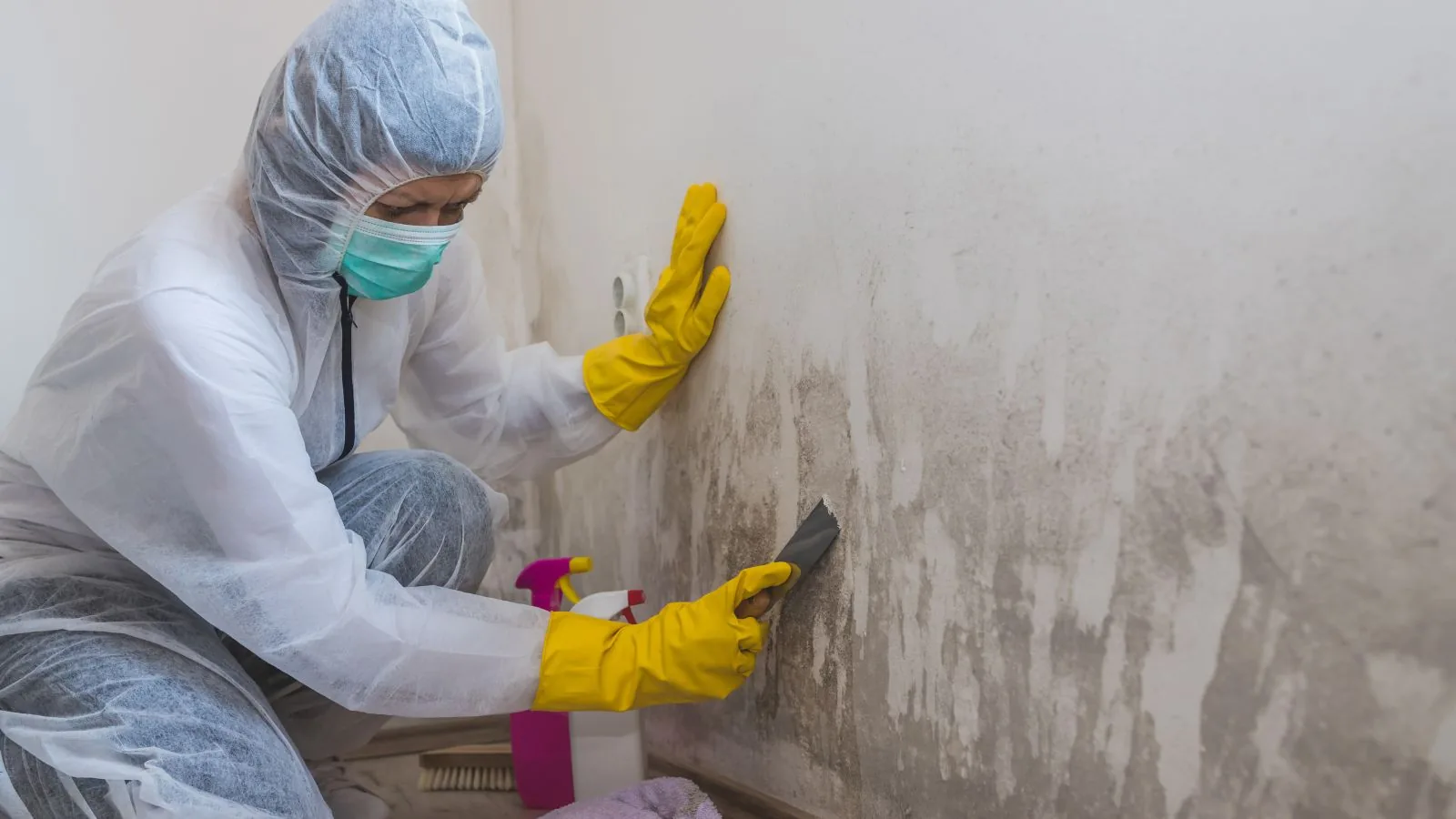
Searching for what black mold does to you usually comes from worry about a dark stain in a bathroom, basement or closet. We are a restoration company, not a medical provider, so we do not describe health effects or diagnose anything.
A physician is the right person for symptoms or concerns about your own health or your family's. What we can do is explain what the phrase means, how dark growth is assessed and what to do about the moisture behind it.
That distinction matters. Many pages online blur the line between a home problem and a medical one. This article stays on the home side, and for the health side it points you to people qualified to answer.
What people mean by black mold
Black mold is a popular label for dark, greenish or black growth on surfaces. The label is not a scientific category. Many different molds look dark, and color alone does not tell anyone which one is present. A stain that looks black may be a common mold, a different organism or even dirt and soot.
That is why professionals do not identify a mold by looking at it. Inspection finds where moisture is and how far growth extends. Sampling, where it is used, can add information. But even when a lab names a species, the practical steps for the home are largely the same: find the moisture, dry it, and remove or clean affected materials.
Where to take health questions
If you or someone in your home has symptoms or concerns, talk to a physician. Public health agencies also publish guidance for residents. The New Jersey Department of Health publishes Mold Guidelines for New Jersey Residents, and the EPA publishes guidance on mold in the home. Those are sources written by health and environmental agencies, which is where this question belongs.
We do not tell people their symptoms are caused by mold, and we do not tell them they are not. Anyone who claims to know from a stain alone is guessing.
What we can tell you about the home
- Mold needs moisture. Without water it does not grow.
- A musty smell or dark stain is a reason to look for the water source.
- Dry materials do not support new growth, which is why drying quickly matters.
- Porous materials, such as drywall and insulation, are usually removed when growth is extensive.
- Solid materials, such as framing, are often cleaned.
The EPA says moisture control is the key to mold control. If there is mold, clean it up and fix the water problem. Cleaning alone, without fixing the water, only delays the return. See structural drying for how moisture is removed.
Where dark growth tends to show up in this area
Homes in this part of Monmouth County commonly see growth in a few places. These include bathroom ceilings with weak ventilation, basement walls after heavy rain, closets on exterior walls and the area under a sink with a slow leak. The Office of the New Jersey State Climatologist reports about 47.6 inches of precipitation in a normal year, enough to keep lower levels damp when drainage is weak.
Those are moisture problems first, and the growth is what shows. Fixing a bath fan, a gutter or a slow drip addresses the cause.
Source type: Rutgers Office of the New Jersey State Climatologist, New Jersey Department of Health and EPA guidance.
What to do if you see dark growth
Find the water
Look for a leak, condensation or a damp area. This is the most important step.
Do not disturb it
Scrubbing or sanding can spread spores. Keep the area closed off.
Do not paint over it
The EPA advises against painting or caulking over mold.
Do not mix cleaners
Never mix bleach and ammonia. It creates dangerous fumes.
For small areas, the EPA gives a general guide of about 10 square feet or less as something a homeowner can handle with protective gear such as an N-95 respirator, gloves and eye protection. Larger areas, hidden growth or growth after sewage or flood water are better assessed by professionals.
How an assessment helps
An assessment looks at moisture readings, visible growth, the likely source and how far materials are affected. It produces a plan and a scope. It is also the right step before any sampling, since sampling without a plan tells you little. See mold remediation for the stages from assessment to post-remediation check.
Ask whether your state licenses mold work. The New Jersey Department of Health says the state has no certification program for mold companies, so ask each company which standard it follows.
In nearby towns
The same advice applies in Matawan along the creek and in Spotswood near the brooks, where damp lower levels are common. Dark growth there is a signal to look for moisture first.
Why we keep to the home side of the question
It would be easy to answer this question with a list of symptoms, and many sites do. We do not, because we are not clinicians and because the evidence for any one person depends on their own health. The useful help we can give is practical: find the water, dry the materials, remove what cannot be dried and verify the result.
If a family member has symptoms, take them to a doctor and mention the damp conditions at home. Bring photographs and any inspection notes. That gives the physician context, and it keeps the medical judgment where it belongs.
Dark growth or a musty smell? Call and we explain assessment and next steps.
Call (732) 352-9660Frequently asked questions
We do not give health advice. Questions about health belong with a physician, and public health agencies publish guidance for residents.
No. Color does not identify a mold. Many different growths look dark.
The EPA advises that moisture control is the key and that mold on porous materials usually means removal. Never mix bleach with ammonia.
The New Jersey Department of Health publishes Mold Guidelines for New Jersey Residents, and the EPA publishes guidance on mold in the home.
Lower levels after heavy rain, bathrooms with weak ventilation and spaces under sinks are common starting points. The cause is moisture, so look for the source.