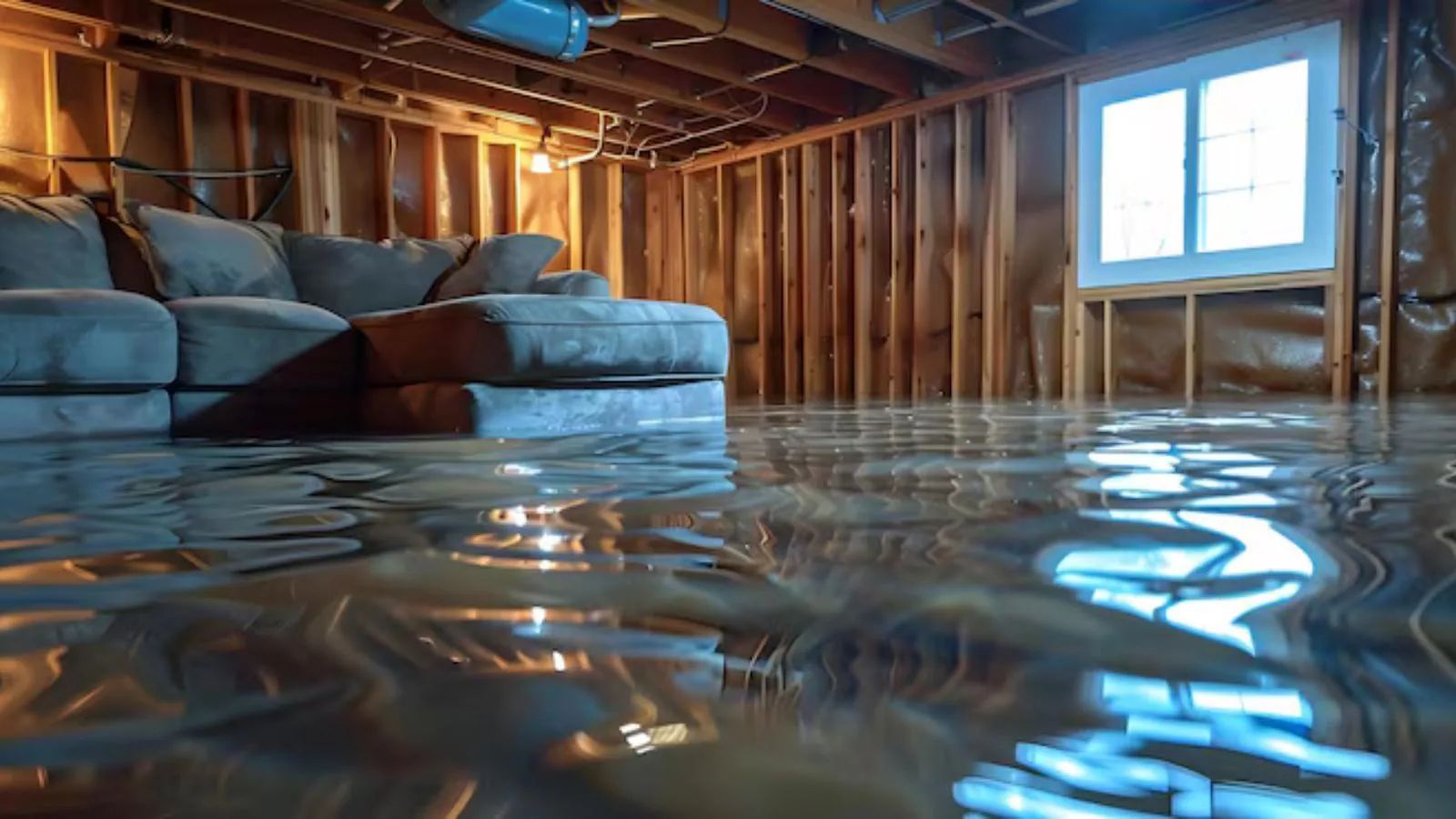
You mopped up the water, ran fans for a few days and the room looks fine, yet the smell remains. A musty odor after water damage is common, and it is useful information. It usually means moisture remains somewhere in the materials, or something wet was left in place. This guide explains where the smell comes from, how to find it and what to do about it, without making health claims.
The smell is a symptom, not the problem. Covering it with air fresheners or fragrance does not fix it. Finding the damp material does.
Where the smell comes from
Odor develops when wet organic material, such as drywall paper, wood, carpet pad or cardboard, stays damp long enough for microbes to grow. Mold needs moisture, so a lingering musty smell is a flag for moisture. Not every musty smell means mold, but every one is worth tracing to its source.
- Carpet pad that was dried at the surface but not underneath.
- Wall cavities with wet insulation.
- Cabinet bases and kick plates that stayed damp.
- Subfloor under vinyl or laminate.
- Stored boxes and soft goods that absorbed water.
- Crawl spaces and basements with damp soil or concrete.
How to track it down
Walk the room and notice where the smell is strongest. Smell near the floor points to carpet, pad or the base of the wall. Smell near a ceiling points to the cavity above. Smell from a closet points to an exterior wall or a hidden leak. A moisture meter confirms the guess, and a thermal camera can show cool, wet areas behind surfaces.
If the source is a wall, ceiling or cabinet, the material may need opening. See wall and drywall water damage repair for how cavities are dried or opened, and carpet water damage restoration for pad and carpet.
| Where the smell is | Likely cause | First step |
|---|---|---|
| Near the floor of a wet room | Wet pad or subfloor | Check moisture under flooring. |
| Near a wall base | Wet drywall or insulation | Read moisture at the base. |
| In a closet | Exterior wall condensation or a leak | Move items and check the wall. |
| In a basement | Damp concrete or stored goods | Run a dehumidifier and sort contents. |
Why Monmouth County summers prolong smells
The Office of the New Jersey State Climatologist reports about 47.6 inches of annual precipitation across New Jersey, and humid summers are the rule in central Monmouth County. When indoor air stays humid, damp materials dry slowly and smells linger.
Running a dehumidifier in a lower level through the summer, keeping bathroom fans working and clearing gutters before storm season all reduce the conditions that feed a musty smell.
Source type: Rutgers Office of the New Jersey State Climatologist and EPA moisture guidance.
What helps and what does not
- Helps: finding and drying the damp material, running dehumidifiers and fixing the water source.
- Helps: removing materials that cannot be dried, such as saturated pad or insulation.
- Does not help: air fresheners, ozone fads or painting over a stain.
- Does not help: bleach on porous materials, which the EPA advises against relying on.
The EPA says moisture control is the key to mold control, and that wet materials should be dried within 24 to 48 hours. If the smell persists weeks after a leak, the drying either did not finish or the leak is still active.
When to call for an inspection
Call if the smell persists after you have dried what you can, if it appears in several rooms, if you see staining or if you cannot find the source. An inspection looks for moisture and growth and produces a plan. See structural drying for what drying involves and mold remediation for assessment and cleanup.
We do not make health claims about smells or mold. If anyone in your household has symptoms, talk to a physician.
In nearby towns
Homes in Spotswood near the brooks and in Matawan along the creek often have damp lower levels that hold smells. A dehumidifier and a check of stored boxes are the quick first steps.
A step-by-step way to trace an odor
- Open windows briefly and then close them, so you smell the room fresh.
- Walk the room slowly, noting where the smell strengthens.
- Kneel and smell at the baseboards, then stand and smell near the ceiling.
- Open cabinet doors and closets and smell inside them.
- Check for stains, soft spots, warped trim or flaking paint near the strongest spot.
- Read moisture there with a meter, or call someone who can.
The point is to turn a vague smell into a location. A location tells you which material to inspect, and that tells you whether drying, removal or a plumbing repair is the next step.
Things that mimic a water smell
Not every damp smell is leftover water damage. Dirty dryer vents, a dry drain trap, a refrigerator drip pan, a sump pit with stale water and a cracked sewer vent can all smell musty or sour. If the smell is near a floor drain, pour water down it to refill the trap. If it is near a sump pit, check that the cover is sealed. A sewer smell is different from a musty one, and it points to plumbing.
If you have ruled those out and the smell remains, moisture in the materials is the likely cause. Mold needs moisture, so finding it is the point.
How long should a smell take to fade
After a properly dried clean-water leak, odors usually fade within days as the materials return to normal. A smell that stays strong after a week of drying and ventilation means something is still wet or something was left in place that should have been removed. Do not wait for a smell to fade on its own for months. The ANSI/IICRC S500 standard judges dryness by readings, not by smell.
Smell that will not go away? Call and we explain inspection and next steps.
Call (732) 352-9660Frequently asked questions
Not always, but it signals moisture and microbial growth is possible. Trace it to the source.
No. It masks the smell. The source has to be found and dried.
If the smell remains after you have dried what you can and fixed the source, call. The EPA says to dry wet materials within 24 to 48 hours.
It helps reduce moisture in the air and the materials. It does not remove materials that cannot dry.
Humid air slows drying and damp concrete and stored goods hold moisture. Run a dehumidifier.