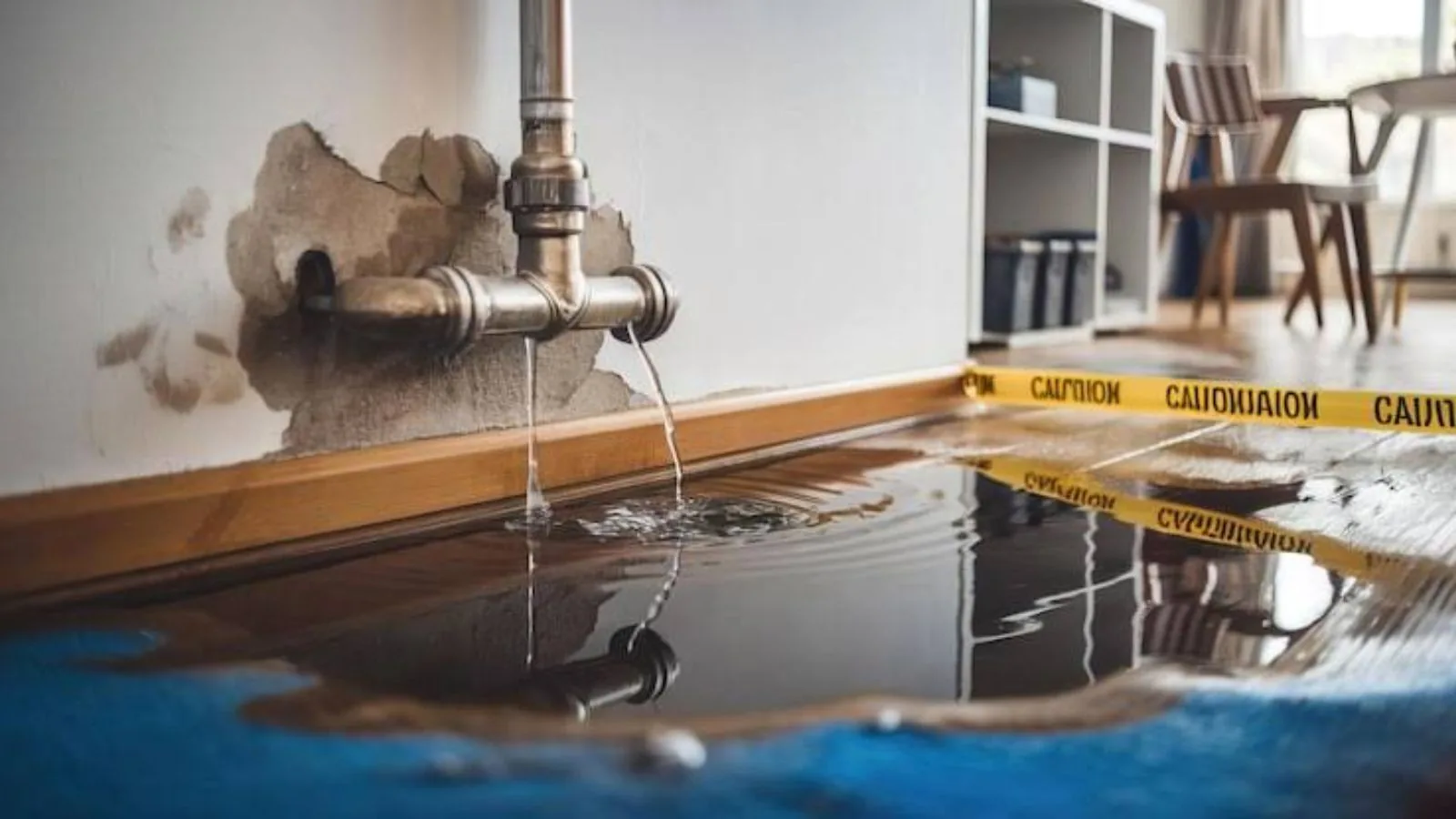
Whether homeowners insurance covers water damage depends on where the water came from, how quickly it arrived and what your policy says. Most standard policies cover sudden and accidental water damage inside the home, such as a pipe that bursts overnight. They commonly exclude flood and often treat slow, long-running leaks differently. This article explains the usual lines, so you can ask your insurer better questions after a loss in Morganville.
We are a restoration company, not an insurer or an adjuster, so nothing here promises how a claim will turn out. Your policy and your insurer decide that. What we can offer is a plain explanation of how these claims are usually framed and what documentation helps.
Sudden and accidental versus gradual damage
Most policies draw a line between water damage that happens suddenly and damage that develops over time. A supply line that splits, a water heater tank that fails or a washing machine hose that pops off is usually sudden. A pipe that weeps for months behind a wall, a slow leak under a sink or a roof that has been seeping for a season is gradual.
The difference matters because gradual damage is often excluded as a maintenance issue, while sudden damage is typically covered. Insurers sometimes dispute which category a loss belongs in, and moisture readings, photographs and a written timeline help settle it. Our guidance on burst pipe water damage explains what a sudden failure looks like on site.
What is usually not covered
- Flood, meaning water that rises from outside, which needs a separate flood policy.
- Sewer or drain backup, unless your policy carries a water backup endorsement.
- Damage from long-term leaks, seepage or lack of maintenance.
- The cost of repairing the failed pipe or appliance itself, in many policies.
- Mold, which is often limited or excluded unless it follows a covered water loss.
The New Jersey Department of Banking and Insurance states that homeowners policies exclude flood damage and that flood coverage comes through separate flood insurance such as the National Flood Insurance Program. If water entered your home from a swollen brook or a storm surge, your homeowners policy will likely not respond, which is why checking your flood coverage before a storm matters more than checking it after.
What to do in the first hours
The Department advises policyholders to call their agent or insurer as soon as possible after a loss, keep the claim number and save documentation. In practice that means stopping the water, protecting the home from further damage and photographing everything before it is moved. Reasonable steps to limit the damage are normally expected of you, and an insurer may refuse to pay for damage that grew because nobody acted.
Call the emergency line if water is still spreading. Extraction and drying are often part of the covered loss, and starting them quickly keeps the claim smaller. See structural drying and dehumidification for what drying involves and why readings are kept.
Morganville and the claims record
In 2021 the remnants of Hurricane Ida led Marlboro Township, which includes the unincorporated community of Morganville, to post flash flood and tornado watch updates for residents. After a storm like that, claims in the area split quickly into two groups. Wind-driven rain through a damaged roof is often treated as storm damage under a homeowners policy, while water that rises from the ground is flood.
Which group your loss belongs in decides which policy you call about, so describe how the water arrived when you speak with your insurer. Noting whether it came from above, from a pipe or from outside the house gives the adjuster the facts they need to route the claim.
Source type: New Jersey Department of Banking and Insurance consumer guidance and Marlboro Township public notices.
Questions to ask your insurer
- Does my policy cover sudden pipe breaks and appliance leaks, and what is the deductible?
- Do I have a water backup endorsement for sewer or sump failures?
- Do I have separate flood coverage, and when does it take effect?
- What documentation do you need, and who is my adjuster?
- Will you cover temporary housing or the cost of drying equipment?
Write down the name of everyone you speak with, the date and what they said. Keep your claim number on every document. If a claim is large or disputed, the Department notes that public adjusters are licensed by the state and are paid from the claim, which is something to weigh before you decide to hire one.
How restoration work fits into a claim
A restoration company does the physical work. Extraction, drying, demolition of wet materials and a written scope are ours. Coverage decisions, deductibles and payment timing are the insurer's. We can talk with your adjuster about what was found and what was done, and our readings and photographs become part of your file. We do not promise approval and we do not handle your claim for you.
When the scope is clear, ask whether the estimate matches what the insurer plans to pay. Some items, such as reconstruction of drywall, paint and flooring, are scoped apart from drying. See wall and drywall water damage repair for how that rebuild is defined.
Nearby towns and the same questions
Homeowners in Matawan along Matawan Creek and in Keyport on the bay ask about flood coverage more often than inland homeowners, because their addresses are closer to mapped flood areas. The FEMA Flood Map Service Center lets you check any address, and your agent can explain what a flood policy would cost for your home.
Water in your home right now? Call the 24/7 line and we help you sort out the next steps.
Call (732) 352-9660Frequently asked questions
Often yes, if the break was sudden and accidental. Policies usually pay for the resulting water damage but may not pay to repair the pipe itself. Check your policy and ask your insurer.
No, not under a standard policy. The New Jersey Department of Banking and Insurance says flood is excluded and requires a separate flood policy.
Usually yes. Your policy states the amount, and some policies use a percentage for certain events. Ask your agent which applies.
If water is still spreading, call the emergency line first and then your insurer. Photograph the damage before anything is moved.
Neither. Claims go to your insurer. The township posts public notices about storms and road conditions, but it does not pay homeowners' claims.